
The Conversation That Never Ended
There is a quiet but profound tension in Jesus’ words recorded in John 16:12–13. It was the moment when the Lord Himself acknowledged that the apostles were standing at the edge of redemptive revelation, yet were not able to carry its full weight. He said to them:
“I still have many things to say to you, but you cannot bear them now.” (John 16:12)
This does not imply limitation; it reveals divine wisdom in timing. Revelation, for Jesus, is not only about what is said, but also about when it is delivered. The disciples had walked with Him, witnessed His miracles, and sat under His teaching. Yet even so, Jesus knew there was more—but it could not yet be placed upon them. Theirs was the conversation that never ended.
But He would not leave them with partial revelation. What was at stake was too critical to leave them half-formed. Instead, He redirected their expectation toward the coming of the Spirit of truth, who would continue the conversation (John 16:13).
That moment quietly opened a door into the world of the Epistles. Following the ascension, Christ’s teaching did not end; it was deepened. The apostles began to write to the Church, not as theologians developing a new system, but as witnesses carrying forward a revelation already planted in seed form by Christ Himself.
The Epistles carry forward the conversation that never ended with the conclusion of Christ’s earthly ministry. The critical question, then, is not whether the Epistles matter as doctrine, but whether we understand them for what they truly are: the continuation of Christ’s instruction to His body on earth, now mediated through the Holy Spirit. And that is where the journey of this study begins.
RECOMMENDED: THE EARLY DATING OF THE GOSPELS: HISTORICAL EVIDENCE FOR THEIR RELIABILITY
John 16:12–13: The Bridge Between the Gospels and the Epistles
In His earthly ministry, Christ did not say everything that was necessary for the life and community that would be birthed through His redemptive work. The spiritual capacity of the apostles at that moment could not yet bear it. Truth, even divine truth, is given in measure according to capacity.
Instead, Christ deferred the fuller unfolding of that revelation to a near future (Acts 1:5), through the agency of the Holy Spirit, who would be poured both within and upon them. Jesus said:
“However, when He, the Spirit of truth, has come, He will guide you into all truth; for He will not speak on His own authority, but whatever He hears He will speak; and He will tell you things to come.” (John 16:13)
The Holy Spirit is not in competition with Christ; He continues Him. He does not introduce a different message to the world; He carries forward the same unfolding of the depth of the redeeming works of Christ and what they mean for the Church—the community of those who believe in Him.
This is where we can begin to grasp the theological significance of the apostolic writing. The Epistles are the continuation of Jesus’ communication in the era of the Church. What the apostles wrote was not a distinct theology, but the truth of Christ—His person and redemptive work, unfolded within the lived reality of the Church.
In this sense, John 16:12–13 serves as a bridge between two phases of redemptive history: the earthly ministry of Jesus and the Spirit-governed life of the Church. It quietly connects what Jesus did and said in His earthly ministry, which are recorded in the Gospels, to what He continues to say in His exalted state to His body through the Spirit.
The same Christ who declared His will physically to His followers in His days in the flesh is the Christ who is declaring His will to His Church in the Epistles through His apostles and His Spirit. The Epistles, then, are not theological innovations, but the expected continuation of Christ’s own teaching ministry through the Spirit.
The Rise of Apostolic Voice: Christ Speaking Through His Appointed Servants

The close of the Gospels does not mark the end of Christ’s revelation, but the end of a mode of communication. In the Gospels, Christ was physically present in the world, traveling the dusty roads of Israel and proclaiming His kingdom. But in the Epistles, the now ascended and exalted Christ is speaking His appointed servants— the apostles. The conversation that never ended in the Gospels is continued in the Epistles.
The apostles did not present themselves as architects of a new system, but as sent witnesses, operating within a commission that originated from Christ. Their authority was not self-generated; it was received (Romans 1:5; 12:3; 15:15). They spoke because they had first heard the Lord, and then entrusted with a message that must extend beyond the physical boundaries of Jesus’ earthly ministry.
Their voices, therefore, carry weight. Throughout the Epistles, there is a clear sense that what is written is not merely remembered words of Christ, but continued revelation through the agency of the Spirit. Paul makes this explicit when he insisted that his gospel was not received from man, but received through revelation.
Galatians 1:11–12:
“But I make known to you, brethren, that the gospel which was preached by me is not according to man. For I neither received it from man, nor was I taught it, but it came through the revelation of Jesus Christ.”
In this way, the apostles functioned as living channels through whom the exalted Christ continues to address His Church.
The ascended Christ is not passive. Though no longer physically present in the world, He remains actively present through His Spirit, forming a unified testimony through those He commissioned. The apostles are not rivals to Christ; they are extensions of His teaching authority within the Church age.
This is why the early believers received apostolic writings as binding instruction rather than optional reflection. Paul wrote to the believers at Thessalonika, thanking God that when they received the word of God which they heard from him, them welcomed it not as the word of men, but as it is in truth, the word of God (1 Thessalonians 2:13).
That distinction is crucial. It signals that, in the Episode, something greater than human correspondence was taking place.
Within this framework, the apostles are not merely messengers, but authorized extensions of Christ’s communication to His body—not replacing Him, but continuing the conversation that never ended in His incarnation.
Thus, when we read the Epistles, we are not moving away from Christ’s voice. We are hearing that same voice continuing—no longer spoken from Judea or Galilee, but from heaven into the expanding life of His Church on earth. The context has changed, but the voice remains the same.
The Epistles as Applied Christology
While the Gospels reveal Christ in His person, the Epistles reveal Him in His implications. This distinction is subtle but decisive.
The Gospels present the visible Christ proclaiming the realities of the kingdom of God. The Epistles present that same Christ explained and applied to the lived experience of believers who are now united to Him.
In this way, the Epistles are not a departure from Christ—they are the application of Christ to the life of the Church.
What was once demonstrated becomes theologically unfolded. The cross, for instance, is no longer only an event in history; it becomes the center of salvation. Justification, propitiation, and reconciliation are the categories through which the apostles help the Church understand what God has accomplished in Christ.
Paul’s writings are especially clear here. He does not merely repeat the sayings of Jesus; he draws out their meaning in ways that touch every dimension of Christian life. When he speaks of being “in Christ,” he is not introducing a new idea, but unfolding what union with Christ means in practice. When he speaks of righteousness, grace, and faith, he is expounding the depth of what Christ had already revealed in seed form.
The Epistles are, in this sense, the Gospels expounded. They take the concentrated revelation of Christ and extend it across the realities of community life, spiritual formation, suffering, and worship. Jesus proclaimed the kingdom; the Epistles reveal the inner life of that kingdom.
Even ethical instruction in the Epistles is grounded in Christology. The call to humility, holiness, and love is never abstract moralism. It is rooted in Christ Himself—His mind, His example, His sacrifice, and His lordship.
Thus, what we encounter is not two competing voices, but one voice unfolding across two phases of redemptive history. The Christ who spoke in Judea now speaks through the apostles.
The Epistles, then, are Christology made practical—truth about Christ shaping the life of the believer.
Life in the Spirit: The Mechanism of Continuing Revelation
John 16:12–13 describes more than a promise of additional teaching; it reveals a mode of divine life in which truth is progressively unveiled within the community of believers. That mode is the life of the Spirit.
When Jesus speaks of the “Spirit of truth,” He is not referring to an abstract force, but to a divine Person who takes what belongs to Christ and reveals it to the Church. This is essential: the Spirit is not inventive. He does not originate a separate message; He mediates the fullness of Christ’s own truth.
This explains the distinctive tone of the Epistles. They are not speculative theology developed in isolation. They read as truth being applied in real time—addressing conflict, moral failure, persecution, and doctrinal instability. The Spirit is not merely informing; He is forming a people.
In this sense, inspiration is not detached dictation, but living guidance within the Church’s unfolding experience of Christ. The apostles write into real situations, yet always in light of Him.
This is what Jesus meant when He said, “He will guide you into all truth.” It implies movement—deepening understanding. The Church is not left to trial and error; she is led into the full weight of Christ’s revelation.
The Epistles are the result of that guidance. They show the Spirit shaping doctrine, ordering worship, correcting error, and anchoring hope in the return of Christ. Yet through it all, Christ remains central.
Believers are instructed how to live, but always in light of who they are in Christ and who Christ is to them. Ethics becomes the outworking of union with Him.
The same Spirit who was promised is the One who gave life to the Epistles. Thus, when we read them, we are not encountering mere human reflection, but the continuation of Christ’s revelation through the activity of His Spirit.
The source of revelation has not changed—only the mode: from spoken instruction in a localized setting to Spirit-inspired instruction across the global body of Christ.
The Church as the Living Audience of Christ’s Ongoing Instruction

The Epistles were not written into a vacuum; they were written into the life of the early Church. This shapes how we must read them today.
They are not abstract theological essays, but pastoral words addressed to real communities—people learning, struggling, and pressing forward in faith under pressure.
The letters are relational. The apostles wrote to people they knew, offering correction where there was error, encouragement where there was weariness, and clarity where there was confusion. Yet beneath all of this lies one constant reality: Christ is addressing His Church—directly, through His appointed apostles.
This is why the Epistles feel so immediate. They do not read like distant historical documents, but like instruction still in motion. The issues vary—division in Corinth, doctrinal confusion in Galatia, maturity in Ephesus, perseverance in Philippi—but the voice remains consistent.
In every case, the answer is not merely situational advice; it is Christ applied to the situation.
This is why the Epistles possess enduring authority. They are not confined to their original recipients because the Church itself is not confined to a single time or place. It is one body across generations. Instruction given in one context becomes nourishment for all.
The Church, therefore, is not only meant to receive Christ’s instruction, but to be shaped by it. The Epistles assume that doctrine and communal life are inseparable. Theology presses toward formation.
This is why belief and behavior are intertwined. What the Church believes about Christ defines how she lives—and how she lives reflects what she believes.
Thus, the Church is not merely reading ancient letters; she is the living audience of Christ’s ongoing instruction, still being shaped by the same voice that once spoke in parables and now speaks through apostolic writings.
The setting has changed, but the address remains alive.
What It Means to Read the Epistles as the Voice of Christ Today
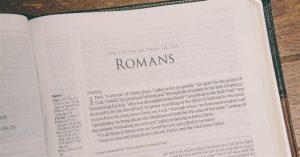
To read the Epistles rightly is to approach them with reverence—not as distant correspondence, but as living instruction from Christ to His Church.
This does not flatten historical context or reduce the apostles to mere transcribers. Rather, it recognizes that the same divine authority that spoke in Christ’s earthly ministry continues through apostolic writing.
This perspective guards against two errors.
First, it prevents us from treating the Epistles as optional commentary. They are not secondary reflections on the Gospel; they are the Gospel unfolded. To diminish them is to misunderstand the continuity Jesus Himself anticipated in John 16:12–13.
Second, it guards against separating the Epistles from Christ. They are not independent doctrinal systems. Every line is anchored in His person, work, and lordship.
The proper posture, then, is not control over the text, but submission to the voice within it.
Practically, this means reading the Epistles with three attentions:
- What they reveal about Christ
- What they correct in the Church
- What they form within the believer
Doctrine is not merely informational—it is transformational. The goal is not only to understand what Paul or Peter meant, but to hear what Christ is saying to His Church through them.
This also reshapes how we view Scripture as a whole. The Gospels and Epistles are not competing forms of revelation, but two phases of one continuous divine communication.
For the believer today, the Epistles remain present-tense. They speak into current struggles with the same authority they carried in the first-century Church. Questions of holiness, unity, suffering, perseverance, and hope are continually addressed to the living body of Christ.
To read them well is to listen with humility and expectancy, allowing Christ’s voice to shape both belief and life.
In this sense, reading the Epistles is not merely study—it is communion. The Church still sits under the teaching of her Lord.
Conclusion: The Conversation That Never Ended
The words of Jesus in John 16:12–13 reshape how we understand the movement from the Gospels to the Epistles. What appears to be an ending is, in truth, a transition into a deeper mode of divine communication.
Jesus did not conclude His instruction with silence. He promised continuity—truth carried forward, revelation expanded, understanding deepened. The Epistles stand as the fulfillment of that promise.
They are not detached reflections or administrative letters. They are the continuing communication of Christ to His body—mediated through the Spirit, entrusted to the apostles, and preserved for the life of the Church.
This means the Church today is not reading a concluded story, but receiving a living voice.
Christian faith is not built on fragments of revelation scattered across time, but on a unified and coherent disclosure centered in Christ. From the Gospels to the Epistles, the voice remains consistent.
To read the Epistles is to step into a conversation that never ended—one that began in Christ’s earthly ministry, continued through the apostles, and still addresses the Church today.
And at the heart of that conversation is the same promise: the Spirit of truth still guides God’s people into all truth, continually drawing them back to Christ and unfolding more of Him to those who will listen.
The revelation of Christ did not end in the Gospels. It deepened in the Epistles.