

Introduction
The person and works of Jesus cannot be properly understood apart from the biblical framework of His threefold office—Prophet, Priest, and King. In two other articles, I had examined His prophetic and priestly offices. Now, we will be exploring the third of His threefold office—The Kingly Office Of Jesus.
Scripture affirms the kingly office of Jesus. While this aspect is often confined to a future eschatological reign, the Bible presents a far more robust and immediate picture: the kingly office of Jesus is a present reality. He reigns as King now, exercising real authority over the earth, the Church, and the nations.
Scripture portrays Jesus, neither as a political revolutionary nor as a passive spiritual figure. Rather, from His incarnation, the biblical narrative consistently testify that He is the promised Messianic King. His kingship is neither symbolic nor futuristic; it is presently operative, inaugurated through His death and resurrection.
Understanding the kingly office of Jesus is therefore not merely a matter of abstract theology. It impacts how believers view authority, obedience, suffering, and mission. To confess Jesus as Lord is to acknowledge Him as King—one whose sovereign reign demands allegiance and inspires confidence.
In this article, I present seven key biblical evidence that establish Jesus Christ as the reigning King.
Understanding the Kingly Office of Jesus
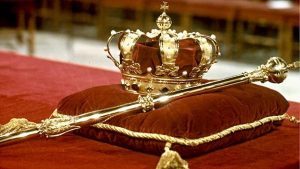
The kingly office of Jesus describes His divine authority to exercise rulership over all things according to the Father’s will. In Old Testament Israel, a king is not merely a political head but a covenantal ruler who rules on God’s behalf.
Therefore, Jesus’s kingship is both messianic and cosmic; it transcends earthly political categories while decisively impacting human history.
While Israel’s kingship was temporary and often flawed, Jesus’s kingship fulfills God’s ideal of righteous kingship. The Psalm and the prophets spoke of a King who would rule in justice, defeat God’s enemies, and establish peace, expectations which converged uniquely and definitively in Christ.
Jesus’s kingship stands in contrast to earthly kingship. Earthly kings rule by coercive power, dominance, and political structures. Jesus’s kingship operates by divine authority, exercised through His Word, His Spirit, and His redemptive work. His kingdom doesn’t originate from this world, yet it actively impacts lives within it (John 18:36).
Then, Jesus’s kingship is not merely futuristic. While there is going to be a future visible manifestation of His reign, Christ’s reign is a present reality. He holds absolute authority (Matthew 28:18), rules His Church (Ephesians 1:22–23), and reigns over nations according to God’s sovereign purposes.
The Davidic Roots of Jesus’s Kingship

The kingly office of Jesus has deep roots in the Davidic Covenant—God’s promise to establish an eternal dynasty for David. In 2 Samuel 7:12–16, God promised to raise a seed for David, who would be a Son to Him, and who would reign eternally.
“When your days are fulfilled and you rest with your fathers, I will set up your seed after you, who will come from your body, and I will establish his kingdom… He shall build a house for My name, and I will establish the throne of his kingdom forever… And your house and your kingdom shall be established forever before you. Your throne shall be established forever.”
In its immediate context, this promise had an immediate fulfillment in Solomon, who was David’s successor to the throne of Israel. But theologians have a unanimous agreement that the promise has a wider messianic scope—that is, it ultimately pointed forward to Jesus.
This Davidic covenant became the foundation for Israel’s expectation of a Messiah King through David’s lineage. The prophets spoke of the Messiah King’s reign of justice, righteousness, wisdom, and divine authority (Isaiah 9:6–7; Jeremiah 23:5–6).
This promise was ultimately fulfilled in Jesus, who came in the flesh through David’s line (Luke 3:23–31). Jesus’ kingship is the continuation and climax of God’s covenantal promise to David. Understanding the Davidic root of the kingly office of Jesus helps us understand why He is described as both King and the Son of David (Matthew 22:42).
Evidence for the Kingly Office of Jesus

Having laid this critical theological foundation, we now turn to the biblical evidence that demonstrates the kingly office of Jesus as a sovereign, present and eternal reality.
Declared King at Birth
Jesus’s kingship did not evolve gradually over time. From the very outset of the incarnation, Scripture presents Him not as a helpless child, but as the heir to David’s throne. The angel Gabriel announced to Mary:
32 He will be great, and will be called the Son of the Highest; and the Lord God will give Him the throne of His father David. 33 And He will reign over the house of Jacob forever, and of His kingdom there will be no end. (Luke 1:32–33)
This is unmistakably a royal language. The promise of David’s throne and an endless kingdom directly echoes the 2 Samuel 7 promise. Luke setting Jesus’s identity in messianic category leaves no doubt that His birth inaugurates the fulfillment of Israel’s Messianic kingly expectation.
The visit of the Magi reinforces Jesus’s royal identity. They arrived in Jerusalem with a stunning question:
“Where is He who has been born King of the Jews?” (Matthew 2:2)
This is significant. The inquiry reveals a child who was already a king. And, their desire to worship Him reflects recognition, though implicitly, of His divine status.
Then, Matthew reinforced Jesus’s kingship by citing Micah 5:2 in verses 6. The shepherd imagery in Micah’s prophecy portrays Jesus as the King who rules with care. Jesus identifies Himself as the good shepherd (John 10:11).
The birth narrative establishes a vital theological point: Jesus didn’t grow into kingship; He was born King. His royalty was not conferred later, but declared by heaven, confirmed by prophecy, and recognized by men.
Jesus Proclaims the Kingdom
Every king has a kingdom. Therefore, for Jesus’s kingship to be a true one, He must have a kingdom. And, He does! From the start of His public ministry, Jesus consistently proclaimed the Kingdom as His central message.
In Matthew 4:17, the phrase “at hand” signifies that Jesus was not proclaiming a future reign, but that God’s reign has drawn closer in His own person. His miracles are not merely demonstrations of compassion, but intentional signs demonstrating the inbreaking of God’s reign (Matthew 12:28).
Jesus’ kingdom proclamation highlights Satan’s defeat. A stronger King has arrived, exercising authority over the powers that enslave humanity. Therefore, Jesus demands a shift of allegiance to His kingdom through repentance.
Jesus taught the nature and operations of His kingdom through parables. Parables like the mustard seed and the leaven portray a kingdom that began humbly but grows relentlessly (Matthew 13:31– 33). Others reveal the kingdom’s incomparable value and the necessity of total commitment.
Importantly, Jesus distinguishes His kingdom from earthly political systems. In John 18:36, Jesus says that His kingdom neither originates from nor operates as the world’s kingdoms do.
Jesus’s proclamation of the Kingdom is not merely announcing a theological concept—He is declaring the arrival of God’s rule which He embodied. The teachings, miracles, and authority all testify to the kingly office of Jesus, and that His reign has already begun. This proclamation stands as compelling evidence that Jesus consciously understood and carried Himself as King.
Enthroned Through Death and Resurrection
The path to Jesus’s kingship runs through the cross. On the surface, His execution seems to contradict every expectation of an eternal kingship. But Scripture presents it as the paradoxical means by which Jesus’s kingship is established. A seeming defeat was God’s strategy for enthroning Christ.
Even in His humiliation, Jesus’ kingship was reinforced. He was charged not as a criminal but for claiming to be a King (Luke 23:2–3). After the soldiers had beaten Him, they dressed Him up as a King (Matthew 27:27–29). Finally, the inscription fixed to His cross reads:
“THIS IS JESUS THE KING OF THE JEWS.” (Matthew 27:37)
These were not random events, but the Father’s exact design. These events intended for mockery serve as profound irony, underscoring Jesus’s royal identity. The mockers unwittingly proclaim the truth: Jesus is King! Human mockery became divine revelation.
Jesus Himself portrays the cross, not merely as the place of suffering, but as the instrument of glorification. He says in Luke 24:25–26:
“…O foolish ones, and slow of heart to believe in all that the prophets have spoken! Ought not the Christ to have suffered these things and to enter into His glory?””
The resurrection is the vindication of Jesus’s kingship. By it, the Father openly demonstrated that Jesus surpasses earthly kings. He defeated death—the chief conqueror of all kings. Peter ties the resurrection to royal exaltation (Acts 2:32–36). The resurrection is not merely proof of Jesus’s divinity; it is the inauguration of His reign as the victorious King (Philippians 2:9).
Exalted to God’s Right Hand
Jesus’s kingship is further confirmed by His ascension and exaltation to God’s right hand. The New Testament repeatedly presents Christ’s ascension as His royal coronation. The “right hand” is figurative for the position of supreme authority, honor, and power. Christ being seated there is a posture of enthronement, not inactivity.
Just before ascension, Jesus declares the universal scope of His authority, as recorded in Matthew 28:18. His authority is not partial, finite, or futuristic; it is universal and present. The risen Christ speaks as a reigning King who now rules over all realms of existence. Philippians 2:9–11 attests to this truth.
The apostles consistently interprets the ascension as the fulfillment of the royal prophecy. Peter explicitly connects Jesus’s exaltation with Psalm 110, one of the most frequently cited messianic psalms in the New Testament (Acts 2:33, 36).
The ascended Christ reigns while His enemies are progressively subdued. This reign is not futuristic; it has begun. The author of Hebrews attests to this same truth of Christ’s installation in the position of supreme authority, honor, and power.
Hebrews 10:12:
“But this Man, after He had offered one sacrifice for sins forever, sat down at the right hand of God.”
The imagery of sitting signifies completed task and assumption of authority. Christ reigns as King precisely because He has completed what no other could—atonement and victory over sin and death.
Therefore, the exaltation to God’s right hand stands as unmistakable evidence for the kingly office of Jesus. He is not a symbolic ruler. He is the enthroned King, presently reigning over history, directing the advance of His kingdom according to God’s sovereign purpose.
Exercising Authority Over the Church
A vital expression of the kingly office of Jesus is His present active rule over the Church. The Church is not a voluntary association under human rule; it is a kingdom community under Jesus’s direct Lordship. To confess Jesus as King is to recognize His supreme authority over His people.
The New Testament consistently recognizes Christ’s authority as the Head of the Church—a designation that conveys both organic unity and governing authority. Ephesians 1:22 states this explicitly:
“And He put all things under His feet, and gave Him to be head over all things to the church.”
The words “under His feet” is drawn from royal and military imagery—it indicates conquest and dominion. Christ’s authority over the Church is not derived from ecclesiastical structures or apostolic succession; it flows directly from His exaltation as King.
Jesus’s headship is both positional and functional. He rules His Church through His Word and Spirit, directing its mission, and disciplining its life. When the ascended Christ spoke to the churches in Revelation, He did so not as a distant observer but as the Lord who walks among His Church (Revelation 2:1).
Jesus Himself affirms His authority within the community of believers when He speaks of church discipline:
“Assuredly, I say to you, whatever you bind on earth will be bound in heaven.” (Matthew 18:18)
This delegated authority presupposes Jesus’s kingship. The Church does not create its own standards; it acts as an instrument of the King’s will. Furthermore, Christ’s kingly rule over the Church provides assurance and stability. He protects His people, builds His Church, and guarantees its ultimate victory (Matthew 16:18).
The Church endures not because of human strength, but because it is governed by a sovereign Lord. This role of authority over the Church stands as compelling evidence of the kingly office of Jesus. He reigns now—guiding, guarding, and governing His people until the day His kingdom is fully revealed.
King Over the Nations
The scope of the kingly office of Jesus transcends the Church. Scripture affirms that Christ’s authority encompasses all nations. His reign is universal, not restricted to religious spheres, and it actively shapes history, governments, and global events according to God’s plan.
The apostle Paul emphasizes the universality of Christ’s authority in Colossians 1:15–17:
“He is the image of the invisible God, the firstborn over all creation. For by Him all things were created… and He is before all things, and in Him all things consist.”
Christ sustains and governs creation, ensuring that nothing occurs outside His will. Jesus’s kingship is not merely symbolic; it is functional. Nations, rulers, and human institutions fall under His divine oversight, whether they recognize it or not. Psalm 2:8–9 provides a vivid picture of God’s appointed King exercising authority over the nations.
Jesus Himself illustrates this cosmic authority when commissioning His disciples (Matthew 28:19–20). The Great Commission is a royal decree. The King directs the expansion of His kingdom into every nation. The success of this mission depends not on human might alone but on the authority of the reigning King.
Furthermore, Jesus exercises the power of His Majesty over rulers and spiritual forces. 1 Corinthians 15:25 and Colossians 2:15 affirm that Christ’s authority over the nations is already operative. Political and spiritual realities are under His sovereign governance, even if full submission will be realized at His return.
Jesus Will Consummate His Kingdom at His Return
The ultimate expression of the kingly office of Jesus is the future consummation of His kingdom. While He reigns presently spiritually, Scripture teaches that Jesus’s kingship will be realized fully, visibly, and without challenge at His return.
Jesus Himself foretold His return as King in unmistakable royal language, in Matthew 25:31:
“Then the Son of Man will come in His glory, and all the holy angels with Him, and then He will sit on the throne of His glory.”
Scripture portrays Jesus’ return as His formal and physical enthronement before all creation. His kingship will be universally acknowledged. The book of Revelation illustrates this truth (Revelation 19:11, 16). Every enemy will be defeated, every rebellion subdued, and every knee will bow (Philippians 2:10–11).
The consummation of His kingdom confirms the ultimate authority of the King who has been reigning since His incarnation. Paul emphasizes this continuity between Christ’s present reign and future consummation, in 1 Corinthians 15:25–26:
“For He must reign till He has put all enemies under His feet. The last enemy that will be destroyed is death.”
The resurrection inaugurate His reign; His return will complete it. Jesus’ kingship is therefore both already operative and yet to be fully revealed, assuring believers that God’s promises are both real and unshakable.
What this Means for Believers
Understanding the kingly office of Jesus is not only a doctrinal exercise—it has practical significance for every believer. Recognizing Christ as the eternal reigning King today calls for:
Allegiance: Believers are to submit to Christ’s authority in every area of life.
Confidence: Believers are to trust in His sovereign control over personal and global occurrences. Nothing happens without His permission and His purpose.
Hope: Believers are to anticipate the full consummation of His kingdom at His return. This ought to be the ultimate hope that we look forward to. This hope makes suffering, obedience, and holiness worth doing and bearing.
Mission: Believers are to actively participate in the extension of Christ’s authority and kingdom in this world through the proclamation of the good news of His kingdom and through discipleship.
The seven pieces of evidence outlined in this study—the declaration of His kingship at His birth, Jesus’ proclamation of His kingdom, His enthronement through His death and resurrection, His exaltation to the Father’s right hand, His rulership over His church, His rulership over the nations, and the final and physical establishment of His kingdom at His return—establish beyond doubt that Jesus is King. His reign is historical, present, and eternal, inviting all people to acknowledge and submit to His sovereign authority.