Introduction
At the very center of the Christian faith lies one critical question: Is Jesus God or man? All Christian doctrines—salvation, worship, or eternity—stands or falls on this matter.
If Jesus is not truly God, then He cannot accurately reveal the Father nor provide a salvation of infinite worth. If He is not truly man, then He cannot identify with humanity nor die for us. To err on either side of the God-Man doctrine is to distort the gospel itself.
Scripture neither presents Jesus as a mere moral teacher elevated by legend, nor as a divine spirit merely appearing as human. Rather, it presents Him as one Person with two natures—truly God and truly man.
This doctrine—historically known as the hypostatic union, is not an innovation of later community of Christians, but the synthesis of the Bible’s whole revelation.
In this article, we will see, from the Bible’s own witness, that Christ is the God-Man: truly divine, truly human, without confusion or conflict. We will also see why this dual nature matter, and the profound implications the God-Man doctrine holds for salvation and Christian living.
The Biblical Necessity For The God-Man
The incarnation was not a divine experimentation but a necessity. Humanity’s problem is not merely moral weakness but radical and inherent sinfulness and separation from God (Colossians 1:21).
God is just, therefore, sin must be punished. But God is also merciful, therefore, He desires to save sinners. The dilemma is how can sinful man be reconciled to a holy God?
There is only one way: There has to be a mediator who can represent both parties—one who truly represents God but also truly represents humanity. This necessitated the incarnation which produced Jesus the Mediator.
Apostle Paul, in 1 Timothy 2:5, says:
“For there is one God and one Mediator between God and men, the Man Christ Jesus.”
The incarnation was necessary for redemption. Salvation requires a Savior who is a God-man. He had to be truly man to fully represent us under the law and to die for us. And, He had to be truly God for His obedience to satisfy God, and for His death to atone for us.
The Hypostatic Union

The hypostatic union is the classical Christian doctrine that in the person of Christ, two complete and distinct natures—divine and human—co-existed and are united without conflict, change, or division.
The term hypostatic is from the Greek hypostasis, meaning “person” or “subsistence.” Thus, hypostatic union refers to the union of two natures in one person. The term itself does not appear in Scripture, but the doctrine arises from the Bible’s unified revelation of the nature of Christ.
Scripture presents Jesus, not as the blending of two persons into one, nor as half God and half man, nor as one person with two natures merged into one. Deity and humanity co-existed distinctly, yet in perfect harmony, in Him.
Colossians 2:9 captures this mystery:
“For in Him dwells all the fullness of the Godhead bodily.”
Biblical Evidence for Jesus’s True Humanity
The Incarnation
John 1:14 declares,
“And the Word became flesh…”
This is not poetic metaphor but historical reality. Jesus did not merely appear human—He became human (Galatians 4:4). He entered human history through real birth, and had real growth (Luke 2:51–52).
Genuine Human Limitations
The Gospels present Jesus experiencing hunger (Matthew 4:2), thirst (John 19:28), fatigue (John 4:6), and sorrow (John 11:35). These are not illusions or figurative expressions, but genuine human experiences.
Luke records that Jesus “increased in wisdom and stature” (Luke 2:52). Growth in wisdom presupposes a true human mind.
True Human Mind, Will, and Emotions
The Gospels present Jesus as possessing true human mind, will, and emotions. He expressed deep emotion—compassion for the sick and hungry multitude, righteous anger at injustice, and grief at Lazarus’ tomb. These are marks of authentic humanity.
He also demonstrated that He had true human will, which He had to submit to the Father. His prayer in Gethsemane proves that (Luke 22:42). This reflects a true human will in submission, not pretense.
Death and Burial
Death is the ultimate end of every human. Therefore, to prove that Jesus was truly human, He experienced death. He did not faint on the cross, neither did He pretend to die, as the antagonists of our faith claim. Jesus truly died (Matthew 27:50).
Jesus’s death was verified, and His body buried (John 19:31–42. His resurrection presupposes real death. Without true humanity, the cross becomes meaningless.
Biblical Evidence for Jesus’s True Deity
Divine Names and Titles
Scripture repeatedly applies names and titles to Jesus that belong exclusively to God. One of the most striking examples appears in John 1:1:
“In the beginning was the Word, and the Word was with God, and the Word was God.”
This statement does not merely associate Jesus with God; it explicitly identifies Him as God.
Jesus also appropriated for Himself the divine name revealed to Moses—I AM (John 8:58). This was the covenant name of Yahweh (Exodus 3:14), and Jesus claimed it as His own. The Jews understood His claim and attempted to stone Him for blasphemy.
Other divine titles applied to Christ include Lord, Alpha and Omega, First and Last, and Mighty God. These are not honorary designations but declarations of divine identity.
Divine Attributes
Jesus also exercised many divine attributes:
- He demonstrated omniscience by revealing the thoughts of men (Mark 2:8).
- He demonstrated omnipotence by calming storms (Mark 4:39).
- He demonstrated authority over life and death by raising the dead (John 11:43–44).
- Scripture also ascribes eternity to Him (Hebrews 13:8).
All of these attributes belong to God alone, yet Jesus exercised them.
Divine Works
Jesus also did works that are exclusively divine. For example, He forgave sins—an act that the Jewish religious leaders recognized as divine prerogative (Mark 2:7). Yet, He did not correct them—a quiet admission that He is God.
Then, Scripture attributes creation itself to Christ (John 1:3; Colossians 1:16).
He Received Worship
Jesus received worship from people. Thomas worshipped Him, declaring, “My Lord and my God!” (John 20:28). Yet Jesus did not rebuke or correct Him. In the Bible, angels and servants of God refused worship (Revelation 22:9). But Jesus received it freely admitting His deity.
The Resurrection
Apostle Paul presents the resurrection as the ultimate evidence for Jesus’s deity. He says in Romans 1:4 that Jesus was
“…declared to be the Son of God with power according to the Spirit of holiness, by the resurrection from the dead”.
The Son of God is a title that reveals Jesus’s divine identity. The resurrection proves that Jesus is not just a mere human. He did not end the way all humans end.
The Historical Witness of the Church
In Church history, heretical views arose, which negated the orthodox view of Jesus’s dual natures. These heresies typically overemphasized either of the two natures, or failed to maintain their proper unity.
Notably is docetism, which denied Christ’s humanity, asserting that Jesus only seemed to be human. The view states that His body, suffering, and death were illusory. It undermined the incarnation and rendered Christ’s suffering unreal.
Another is ebionism, which denied Christ’s deity. It portrayed Jesus as a mere man, though uniquely righteous, who was anointed by God. It rejected Christ’s eternal pre-existence.
In response, the Church articulated Scripture’s teachings about Christ. The Council of Chalcedon (AD 451) affirmed Christ as
“truly God and truly man… to be acknowledged in two natures, without confusion, without change, without division, without separation.”
This was not an innovation, but a faithful articulation of biblical revelation of Christ.
Why the God-Man Matters for Salvation

The necessity of Jesus’s dual nature boils down to the issue of humanity’s redemption, nothing more, nothing less.
1. Salvation Requires a Mediator Who Fully Represents God and Man
Sin is not just moral failure but relational rupture with God. Therefore, salvation must involve reconciliation of God and man (2 Corinthians 5:18–19), requiring a mediator who can legitimately represent both sides.
A merely human agent would be shut out by God’s holiness. But a merely divine agent would lack true solidarity with humanity. Only the God-Man could have bridged the gulf without compromising either side.
As man, Christ represented humanity from within. As God, He represented God faithfully and completely. Thus, salvation hinges both on who Christ is and what He did.
2. Only the God-Man Could Offer a Sacrifice of Infinite Worth
Sin is committed against the holy God. Thus, sin carries a weight that no finite creature can satisfy fully. While Old Covenant’s animal sacrifices temporarily covered sin, they were intrinsically insufficient (Hebrews 10:1–4).
Jesus’s humanity makes sacrifice possible; His deity makes it sufficient (John 1:29). The divine nature of Christ gives His sacrifice infinite value—eternally sufficient for all who believe. The cross saves not merely because blood was shed, but because it is the blood of God (Acts 20:28).
3. Redemption Demands Perfect Obedience Rendered from Within Humanity
Salvation requires not only Christ’s death, but also His life of obedience life.
In Adam, humanity failed to keep God’s law perfectly (Galatians 3:10). Thus, we need another representative head who could keep the law perfectly. The obedience had to be human obedience— rendered under the law, in real human conditions. But it also had to be flawless and complete.
That level of obedience is possible only if Jesus was the God-Man.
4. Only the God-Man Can Truly Defeat Death and Satan
Humanity’s enemies are not abstract concepts but real powers: sin, death, and satan. Victory over such enemies requires more than a moral teacher. Death and satan could be defeated only by one who is not subject to them; sin could be overthrown only by one who is not vulnerable to temptation (Hebrews 2:14).
Jesus—the God-Man—faced death voluntarily as man and emerged victorious as God. His resurrection is triumph—the public declaration that divine life has conquered human death.
5. Salvation Requires Real Identification, Not External Intervention
God cannot save humanity from a distance. Redemption is not a decree to be spoken from heaven; it is a work to be accomplished from within the human condition (Hebrews 4:15).
Christ’s humanity ensures real experiential identification—hunger, suffering, temptation, etc. His deity ensures that such experiences do not diminish His saving power. Because He is the God-Man, Christ does not merely help humanity, He assumes humanity and heals it from the inside out.
6. Only the God-Man Can Establish a New Humanity
Salvation targets the emergence of a new humanity. But a mere human agent, who is tainted by human sinfulness, cannot become the source of renewed human race. A mere divine agent cannot represent humanity organically.
As the God-Man, Christ became the source of a new creation (2 Corinthians 5:17). Union with Christ is salvific precisely because the one with whom believers are united is both God and man. His divine life becomes communicable to redeemed humanity because it is now permanently joined to human nature in His person.
7. Justification Requires a Righteousness That Is Both Human and Divine
Justification is not merely being forgiven but righteousness being imputed (Romans 4:5–8). If Christ were merely human, His (imperfect) righteousness would have been unsatisfactory to God and unbeneficial to humans.
But being the God-Man, He possessed a righteousness that satisfied God and benefitted humanity. By His righteousness, we are placed in a right standing before God.
8. Eternal Life Can Only Be Given by One Who Possesses It
Salvation climaxes not merely in pardon but in eternal life. Eternal life does not reside with humans. It is something God is (John 1:4). Christ gives eternal life because He possesses it inherently as God. Yet He gives it to humans because He shares our nature.
The God-Man does not merely promise eternal life; He imparts it through union with Himself (John 17:2–3).
9. Christian Worship is only Correct because of the God-Man
Worship and salvation are inseparable. The saved community is a worshiping community. But if Christ were not God, a worship directed to Him would be idolatrous. And, if Christ were not man, worship through Him would lack mediatorial grounding.
Salvation leads to worship because salvation is effected by One who is worthy of worship. The God-Man alone satisfies this requirement (Philippians 2:10).
10. Only a Savior who is a God-Man Could Never Fail
A merely human savior could sympathize but not save. And, it will be impossible for a merely divine savior to die. Only a savior who is the God-Man can meet the human and divine requirements for salvation (Hebrews 7:25).
Why the God-Man Matters for the Christian Life
1. Participation in Christ
Christian living is not moral self-reform but participation in the divine life. This participation is only possible because Christ is the God-Man. If He were merely human, participation would be impossible, reduced to mere imitation. God’s life would be inaccessible.
But because Christ is also God, believers are joined to Him by the Spirit and genuinely share in His life. Thus, Christian living is Christ living His life in believers (Galatians 2:20).
2. The God-Man Grounds the Believer’s Union with God
Union with God is the heart of Christian experience. Scripture speaks loudly about being in Christ (1 Corinthians 6:17).
This union is neither abstract nor figurative. It is real, covenantal, and personal. The God-Man makes this union possible because He has united humanity to deity in His own person.
Believers do not metamorphose into deity; rather, we are joined to God through the humanity of Christ. All Christian living—prayer, holiness, perseverance—flows from this union.
3. Obedience Is Possible Because Christ Obeys in and Through His People
Christian obedience is not autonomous law-keeping but participatory obedience. Because Christ is man, His obedience sets the pattern for human life. But because He is God, His obedience has continuing efficacy and power.
The God-Man does not merely command obedience; He enables it by sharing His obedient life with His people (Philippians 2:12–13). Thus, Christian living is not striving for righteousness but living from a righteousness already embodied in Christ.
4. The God-Man Makes True Prayer Possible
Christian prayer is not a monologue directed toward a distant deity. It is communion with the Father mediated by Christ (Ephesians 2:18).
As man, Christ prays with and for His people. As God, He hears and answers prayer. The believer’s confidence in prayer rests not in intensity but in Christ’s mediatorial role. Christian living would collapse into either despair or presumption without the God-Man standing at the center of communion between God and humanity.
5. The God-Man Provides Compassion and Help
Christian living involves temptation, struggles, and at times, failure. The believer does not need a distant judge but a sympathetic intercessor (Hebrews 4:15).
Christ’s humanity guarantees genuine sympathy; His deity guarantees sufficient help. A merely human high priest could sympathize but not help. A merely divine being could command but not empathize. The God-Man provides both compassion and help, making perseverance in the Christian life possible.
6. Sanctification Is the Outworking of the God-Man’s Life
Sanctification is not self-generated holiness but the progressive manifestation of Christ’s life in believers (Colossians 1:27).
Because Christ is the God-Man, sanctification is human life renewed by divine life, mediated through Christ’s glorified humanity by the Spirit. Christian virtues—love, humility, patience—are not abstract ideals but reflections of the incarnate Christ’s character reproduced in His people.
7. The God-Man Redefines Suffering in the Christian Life
Suffering is inevitable in Christian living, but its meaning is transformed in Christ. By His humanity, Christ suffered in a true sense. But being God also, suffering led Him to glory, not defeat.
The believer’s suffering is participation in Christ, not punishment (Philippians 3:10). The life of the God-Man assures us that our suffering is neither meaningless nor final, but a means of sharing in Christ’s glory.
8. Christ’s Humanity Shapes Moral Living
Christian ethics are not abstract principles but embodied truths (1 John 2:6). Christ’s life in the flesh provides the concrete shape of Christian living—how to love enemies, resist temptation, and serve others. Yet His deity ensures that this ethic is not unattainable idealism. The same Christ who walked in obedience now empowers believers to walk likewise.
9. The God-Man Secures the Believer’s Identity and Assurance
Christian identity and assurance is rooted in Christ’s person (Colossians 2:10). Because He is man, believers are truly represented in Him. Because He is God, nothing can overturn His saving work.
Christian assurance flows from knowing that our lives are hidden with Christ in God (Colossians 3:3). The God-Man guarantees both identity and security.
10. Worship, Community, and Mission Flow from the God-Man
The ecclesial, communal, and missional nature of Christian living derives from Christ’s dual nature. The worship of Christ is inspired because He is God; fellowship is enabled because He shares humanity; and mission is compelled because He sends His people as the Father sent Him (John 20:21).
Conclusion
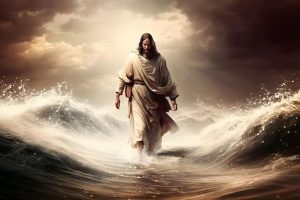
Some today reduce Jesus to a mere teacher of morality, some to a mere prophet, and some as a mere spiritual symbol. Some affirm His humanity but deny His deity. Scripture rejects all such distortions. A merely human Christ cannot save.
Some struggle with the thought of a truly human Jesus, wondering if Jesus had a true human nature, does that mean He is subject to sin like all humans?
The problem with this thought is that we have associated human nature with sin so much that we think it is synonymous with sin. But the original human nature, which pre-existed the fall, was not tainted by sin.
Augustine—a revered theologian—described man in the original state of creation in Latin as “posse non peccare”, meaning able to not sin. Human nature was not always tainted with sin. It was once righteous, holy, and good.
Thus, the human nature Jesus possessed in His earthly life as the God-Man was the true human nature, as God created it and intended it to be.
Christ is not partially God or merely man. He is the God-Man, the eternal God who took on flesh for our salvation. To know Him rightly is to worship rightly, live rightly, and hope rightly.
The call of Scripture is clear: behold Him, trust Him, and confess with Thomas, “My Lord and my God.”