
Introduction
One of the most familiar utterances of Jesus in the Bible is the prayer, “Your kingdom come”. However, these words—recited weekly, even daily, by millions of Christians in what is known as the Lord’s Prayer—is poorly understood, and are treated as a mere liturgical routine. Yet this radical request reveals the heart of Jesus’s message and mission.
From the outset of His ministry, Jesus announced the arrival of God’s Kingdom as the defining reality of His redemptive work. His first message, “Repent, for the kingdom of heaven is at hand” (Matthew 4:17), was a proclamation that God’s long-awaited reign was invading the world through Him. This—the kingdom of God— was the framework that gave meaning to His entire earthly life.
When Jesus taught His disciples to pray, “Your kingdom come,” He was not telling them to long vaguely for heaven or to hope for a distant spiritual future. He was teaching them to align themselves with God’s active reign which has come through His person. To pray this prayer is to ask that God’s authority displace every rival rule: sin, self, culture, and even religion.
The Context Of “Your Kingdom Come”
To grasp the weight of the prayer “Your kingdom come”, we must see it within its immediate context. It is part of what is known as the Lord’s Prayer (Matthew 6:9ff)—a well ordered model prayer that reflects Jesus’ view of God, humanity, and redemption. The petitions are interwoven, and the Kingdom of God takes a central position.
The opening, “Our Father in heaven,” highlights God’s relational nature as Father. It situates believers’ prayer within filial relationship with God. When we pray, it is as children talking to our Father. This assures us that though the One to whom we pray is in heaven, still He is intimate, personal, and caring.
The first petition, “Hallowed be your name,” concerns God’s glory. It reveals God as deserving of reverence for His holiness. The petition, “Your kingdom come,” follows. This order is significant. The manifestation of the kingdom of God is inseparable from the honoring of God. God’s reign advances wherever He is revered and submitted to.
The parallel petition, “Your will be done, on earth as it is in heaven,” further clarifies the Kingdom. God’s Kingdom is not defined by territory or political power, but by submission to His will. In heaven, God’s will is obeyed. To pray for God’s Kingdom to come on earth then is to ask that the earth become increasingly yielded to God’s will. The Kingdom is expressed through God’s sovereign authority.
This context negates the ideas that God’s kingdom is about escaping the earth or is merely an internal spiritual experience. Rather, “Your kingdom come” casts an image in which God’s authority invades the earth, transforming people, communities, and ultimately the entire created order. God’s Kingdom is deeply personal, thoroughly transformative, and unmistakably cosmic.
Therefore, within the Lord’s Prayer, “Your kingdom come” functions as a bridge between God’s sovereign reign and human obedience. It expresses both a longing for God’s reign to be realized and a commitment to live under that reign. It is not a passive wish, but a formative prayer that shapes believers into participants in God’s very mission.
Understanding the Kingdom of God

The idea of the kingdom of God did not start with Jesus. It was deeply rooted in the Old Testament’s theology and hopes, but radically redefined and fulfilled in the person and work of Christ.
God is King—a universal, sovereign, and eternal King (Psalm 10:16). But, in the Old Testament, God’s kingship was specially expressed within the context of His covenant relationship with the nation of Israel. God set up Israel as His kingdom on earth (Exodus 19:6). Though Israel had human kings, yet God was her true Ruler. The human kings ruled by His authority and according to His laws.
But because of unfaithfulness, God often punished Israel through the Gentiles, climaxing in Jerusalem’s destruction and exile in Babylon. The Jews saw this as the fall of God’s kingdom. Then God began to proclaim a coming King through David’s line, who would establish an everlasting kingdom (2 Samuel 7:12–16; Isaiah 9:6–7).
This promise fueled the Jewish expectation of the coming of God’s kingdom. They anticipated a warrior Messiah who would destroy the Gentiles and reestablish the kingdom of Israel. Thus, the Jewish view of God’s Kingdom is thus political and ethnic.
Therefore, Jesus’ proclamation of the nearness of God’s kingdom caught the Jews’ attention and drew many to Him. All of His disciples followed Him because of this national hope (Luke 24:19–21; Acts 1:6).
But the kingdom Jesus was inaugurating was far from the Jewish expectation. Instead of an army, He raised disciples. Instead of attacking the Gentiles, He loved them. Instead of aligning with the powerful, He befriended the lowly. He made clear that His kingdom captures all people—Jews and Gentiles alike.
The Kingdom as God’s Sovereign Reign
The word kingdom primarily denotes rulership authority, and secondarily a realm. This reflects in Jesus’s teaching. God’s Kingdom is firstly His sovereign rule breaking into the hearts of men and transforming them. To be part of the Kingdom is to submit to God’s authority; to reject God’s authority is to reject His Kingdom.
Two dimensions of the Kingdom are present in Jesus’ teachings. On one hand, Jesus presents God’s Kingdom as a present reality. He declares in Luke 11:20:
“If it is by the finger of God that I cast out demons, then the kingdom of God has come upon you.”
This present Kingdom is marked by God’s power at work in the workings of miracles, casting devils out, calming the storm, even now through believers. On the other hand, Jesus spoke of a future coming of the Kingdom in glory, when He would judge the world and restore all things (Matthew 25:31–34).
This is not a tension as some theologians think, but the full revelation of the Kingdom of God. The Kingdom is already inaugurated and active in the world through Jesus’ redemptive work but will be consummated at Christ’s return.
The Heart of Jesus’ Message

The Kingdom of God is at the heart of Jesus’s teaching. His message is “the gospel of the kingdom” (Matthew 4:23; 9:35). This was the focus of His preaching, not merely one topic among many.
Jesus did not teach mere moral principles. He proclaimed the news that God was acting decisively to reclaim His rightful dominion over the earth. He confronted His hearers with a choice: repent and pledge allegiance, or continue to resist and perish (Matthew 4:17).
Jesus’ message is both comforting and unsettling. It is good news for the broken, offering forgiveness, restoration, and hope. But it is unsettling for the religious elites, exposing the emptiness of their self-righteousness.
Jesus taught the nature of God’s Kingdom through parables, using common images—seeds, soil, treasure, etc. Through the parables, He emphasized two important things:
(1) The Kingdom’s unspectacular nature. Like a seed growing quietly, it is easily overlooked, yet its impact is unavoidable.
(2) The Kingdom’s incomparable value. Like a treasure found, it is worth giving up everything to obtain.
Also, Jesus displayed the power of God’s kingdom visibly. His miracles were not merely acts of compassion. They were public statements of the Kingdom’s power. They testified that God’s reign was confronting the effects of sin and the dominion of satan (Matthew 12:28).
These signs validated Jesus’ message and revealed God’s Kingdom as restorative, not destructive. God’s reign brings wholeness and freedom where there is brokenness and bondage.
Inevitably, the Kingdom message clashes with other rival authority—religious and political. Jesus asserted authority in ways that challenged established systems (Matthew 7:28–29). He forgave sins, redefined the Sabbath, reinterpreted the law, etc.
Jesus was not merely informing His audience in the gospel of the Kingdom; He was compelling them. He demanded a response of repentance and allegiance. To hear the gospel is to be confronted with the reality that God’s reign is here and that a choice must be made.
The Heart of Jesus’ Mission
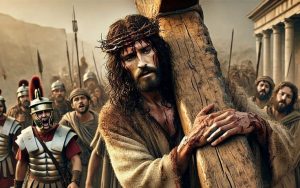
The Kingdom of God also stands at the center of Jesus’s earthly mission. He did not merely preach the Kingdom, He actually inaugurated it, through His death and resurrection.
Firstly, the Gospels portray Jesus as the promised King. He came from David’s lineage. His birth was announced in royal terms (Luke 1:30–33). And, His triumphal entry into Jerusalem underscores His kingship (John 12:12–15).
Jesus’ authority over nature, sicknesses, demons, even death were not mere power displays. They also underscores His kingship. They were signs that God’s rightful reign was being restored to the earth through the Son.
Yet Jesus redefined what kingship meant. He rejected coercive power and embraced servanthood, teaching that greatness in God’s Kingdom is measured by humility and self-giving love.
Secondly, the crucifixion stands as the most counterintuitive expression of Jesus’ kingdom mission. On the surface, it appears like defeat. Yet it is the decisive means through which sin and death were defeated (Colossians 2:13–15). In the cross, Jesus conquered, not through force, but through obedience.
The cross reveals the true nature of God’s Kingdom. It is a reign founded upon sacrificial love, not domination. Jesus was first crowned with thorns, revealing God’s heart in His enemies’ redemption rather than their destruction.
Thirdly, the resurrection vindicates Jesus’s kingdom mission. Through it, His Lordship over all things, even death, was declared. When He ascension, He was enthroned (Acts 2:32–36), making the Kingdom a present and active reality. The ascension does not end Jesus’ involvement in the world. From heaven, He continues to reign on earth through His Spirit (Ephesians 1:18–22).
Ultimately, Jesus’s final charge to His disciples, called the Great Commission (Matthew 28:18-19), reflects His kingly authority. It is a mandate to extend His kingdom by bringing people under His Lordship. It is a continuation of His mission through His people. The Church is not the Kingdom. Rather it bears witness to the reign of the King and embodies His dominion authority.
In every aspect, Jesus’s mission reveals the Kingdom as both a gift and a demand—freely given through grace, yet requiring total allegiance. To follow Jesus is to enter a Kingdom secured by His sacrifice and governed by His sovereign love.
Submission And Allegiance To The Kingdom

It becomes clear that the prayer “Your kingdom come”, goes much deeper than what we often think. It is a declaration of allegiance. It acknowledges Christ as King and that His will takes precedence over every rival rule—personal, cultural, social, or political loyalties. To pray this prayer honestly is to renounce autonomy and submit to God’s rule.
“Your kingdom come” is a costly prayer. It confronts believers with the question of who truly governs our lives, decisions, priorities, and desires. The Kingdom of God is not merely a truth to be admired, but a reality to be submitted to.
In Matthew 6:9–10, “Your kingdom come” is immediately followed by “Your will be done”. This means that obedience to the King’s will is essential to kingdom living. To pray “Your kingdom come” while resisting the King’s will is to be a hypocrite. Jesus warned against mere verbal profession without obedience (Matthew 7:21). Kingdom allegiance is demonstrated through obedience to the King.
But this allegiance is not without cost. And, Jesus did not mince words about this. Allegiance to God’s Kingdom demands self-denial, daily cross-bearing, and the willingness to forsake other loyalties (Luke 9:23), such as self, wealth, status, and even family, when these conflict with loyalty to Christ. Yet this cost, in an actual sense, is not a loss but a gain. The King promises both present and future rewards for forsaking everything else for His sake (Matthew 6:33).
Importantly, the prayer “Your kingdom come” has a sanctifying effect on the believer’s inner life. It trains the heart to desire what God desires and to grieve what dishonors His reign. Over time, the prayer becomes formative, cultivating a right heart within the believer.
Living In Between The Times
This truth becomes apparent. Believers are caught in between the times, having to live in between the Kingdom’s present reality and its future consummation.
Through the finished work of Christ, the way into the kingdom of God has been opened. Now, people can enter into this supernatural life through the regeneration work of the Holy Spirit (John 3:3, 5), through faith in Christ’s sacrificial death and resurrection. Therefore, everyone who has put faith in Christ experientially enjoys God’s beautiful reign as a present reality through:
- Ongoing, personal, and experiential relationship with the Father, Son, and Holy Spirit in everyday life (1 Corinthians 1:9; 1 John 1:3). We hear His voice through reading and hearing the Word, and through His direct, personal communication. We experience His felt presence in prayer and worship.
- Life within believers’ community marked by love and service (Acts 2:42–47).
- The work of the Holy Spirit in personal, ongoing transformation (Galatians 5:22–23).
- Participation in Christ’s mission to extend His reign throughout the world (Matthew 28:19–20).
In this sense, the Kingdom of God is not a distant future hope alone—it is a present experience shaping believers’ daily lives. Nevertheless, the Kingdom is also a future hope. Sin, suffering, injustice, and death still pervade the world. All things are not reconciled under Christ’s lordship yet (Revelation 21:1–4). Believers look forward to the future consummation of the Kingdom at Christ’s return (Matthew 25:31–34).
This duality prevents spiritual complacency. The Kingdom’s present manifestation motivates obedience, while the future promise fuels hope and perseverance. Christians live as pilgrims in this world, anticipating the day when God’s reign is visibly and universally acknowledged.
The Kingdom life in the present is countercultural—confronting and changing cultures. Believers are called, not to conform to the surrounding cultures, but to live distinctly, and to conform the cultures of God’s Kingdom (Romans 12:2). This makes the Kingdom life costly. The world will hate and persecute us because of our distinctness (John 15:18–21). Therefore, anyone who desires to come into this life must first understand the cost and be sure (Luke 14:25–31).
Implications For Believers Today
The Kingdom of God is not an abstract theology; it is a truth that has practical implications for believers living, shaping priorities, and reorienting Christian living.
1. The Kingdom of God Affects Personal Living
Kingdom living demands surrendering choices, desires, and ambitions daily to God, seeking for His will alone to be done (Romans 12:1–2). It aligns the heart with God’s priorities. And, it reshapes our character through the Holy Spirit (Galatians 5:22–23).
2. Kingdom Living Impacts Family, Work, and Community
The home, workplace, and community are the platforms for manifesting the characters of the Kingdom. God’s reign in and through believers is expressed through practicing love, mercy, forgiveness, integrity, justice, and service at home, work, and in the community.
3. Believers Become Witnesses to the Kingdom
Importantly, Christians, as citizens of God’s Kingdom, become witnesses to the Kingdom through words and deeds. Allegiance to the Kingdom compels us to invite others into the same life, through the preaching of the gospel of the Kingdom (Mark 16:15–16).
4. Believers Become Channels for God’s Mercy
The Kingdom education empowers believers to do acts of mercy—offering kindness to the needy. Witnessing for the Kingdom is most effective when our words are reinforced with deeds borne out of Christlike love and compassion (1 John 3:18).
5. Anticipation of the Future Reality
Kingdom living keeps believers anticipatory of the coming consummation of God’s Kingdom. We live with confidence that Christ’s reign which has begun spiritually will one day be visibly established in this world (Revelation 21:1–4). This anticipation inspires moral and courageous living in the face of temptation and suffering in this present life.
God’s Kingdom living requires engagement in the world without succumbing to worldly values, maintaining faithfulness as God’s ultimate victory approaches.
Conclusion
The prayer “Your kingdom come” is far more than a popular phrase recited in devotion. It is a window into the heart of Jesus’s message and mission. In it, we encounter the central reality of God’s reign—a Kingdom inaugurated through Christ’s death, resurrection, and ascension, and advanced through His Church, and destined for ultimate consummation.
To pray “Your kingdom come” is to acknowledge God’s sovereign authority, to surrender to God’s sovereign rule, and to embrace a life aligned with God’s sovereign will. This prayer brings believers into a rhythm: living under the Kingdom’s authority, working for its expansion in the world, and waiting for its full, future manifestation. Your kingdom come is a prayer of submission, hope, and active participation.
This way, the believer becomes a participant in the very movement of God’s Kingdom—a movement that begins in the heart, extends through the Church, and will culminate in the renewal of all creation.