
Introduction
This study is a sequel to an earlier study titled Sin In Biblical Theology. Click here to read.
The problem of sin lies at the heart of the biblical story. From the moment Adam and Eve broke God’s law, humanity became alienated from God, subject to the corrupting influence of sin, and to physical mortality. Even the created order was disrupted.
But, above all, the Bible is about redemption. From its very beginning, Scripture begins to reveal God’s plan to deal decisively with sin and its effects. Rather than abandoning His creation, God responded gracefully, progressively unveiling His plan through covenants, shadows, prophecies, and ultimately through Christ.
God’s answer to the sin problem transcends the removal of guilt alone. Through the person and work of Christ, God provides righteousness, reconciliation, adoption, the gift of His Spirit, and the hope of a restored creation where sin and death will never exist again.
This article traces God’s answer to the sin problem across the unfolding biblical story, showing how His redemptive plan reaches its fulfillment in Christ and secures eternal salvation for everyone who believes.
The First Gospel

Sin entered the world through man’s willful rebellion, but God never abandoned humanity to its misery. Immediately after man sinned, God revealed His redemption plan. In what is commonly called the protoevangelium—the first gospel, God declared:
“And I will put enmity between you and the woman, and between your seed and her Seed; He shall bruise your head, and you shall bruise His heel.” (Genesis 3:15)
God foretells the coming of a Redeemer—the Seed of the woman—who would ultimately defeat satan. The serpent would bruise His heel, a figure of suffering, but the Redeemer would crush the serpent’s head, signifying His decisive victory over satan(Hebrews 2:14–15).
Significantly, this promise was given before humans were expelled from Eden. Even in the midst of judgment, God displayed His mercy by announcing His intention to save sinners. Redemption, therefore, was a divine initiative rooted in God’s grace and eternal purpose (2 Timothy 1:9–10; Titus 1:2).
This promise became the foundation for the rest of biblical narrative. God unfolded His plan progressively, until its fulfillment in Christ (Genesis 22:15–18; Galatians 3:16).
Therefore, the redemption story began in Eden where God’s grace first shone against the dark backdrop of humanity’s failure, not in the New Testament.
The Principle of Substitution
Still in Eden, God unveiled a vital principle in redemption, the principle of substitution—the innocent suffering for the guilty.
Adam and Eve attempted to cover their nakedness with leaves, but God replaced it with coverings made from animal skins (Genesis 3:7, 21). The text is not explicit about the killing of the animals, but the provision of skins implies that sinless lives were taken to cover the sinners.
As God’s plan unfolded, the principle of substitution became more clearly expressed through the Levitical sacrificial system. Animals were offered for sins in the place of the people of Israel, emphasizing that sin deserves death (Ezekiel 18:4).
Substitution was the most clearly portrayed in Israel’s annual Atonement (Leviticus 16:1–34). First, the high priest offered a lamb, then he released the scapegoat to symbolically bear the nation’s sins into the wilderness, portraying both atonement and the removal of guilt.
Yet the sacrifices were just temporary provision. Their repetitions indicate their inability to once for all remove sin or cleanse the people (Hebrews 10:1–4). Instead, they were shadows pointing forward to the perfect sacrifice that God Himself would provide, who is Jesus Christ, “the Lamb of God who takes away the sin of the world” (John 1:29).
Unlike the repeated animal sacrifices, Christ offered Himself once, accomplishing eternal redemption for those who trust in Him (Hebrews 9:6–22; 1 Peter 1:18–20).
Redemption Revealed Through Covenants
God also progressively unfolded His redemption plan through a series of covenants. The covenants represent, not different ways of salvation, but successive stages in the revelation of redemption.
First was God’s covenant with Abraham—a significant point in His unfolding plan. God promised to make Abraham a great nation, to bless him, and, most importantly, to bless all the earth through him (Genesis 12:1–3; Genesis 22:15–18). Paul identifies that offspring as Christ (Galatians 3:8, 16).
About four hundred years after, God established the Mosaic Covenant with Israel at Sinai, comprising of the Law—which revealed His holy standard, and a worship system that included sacrifices, to atone for Israel’s sins and sustain the covenant relationship.
The Mosaic Covenant was never intended to be God’s Answer to the sin problem. Rather, it pointed forward to God’s true answer, which is Christ, and to prepare the way for Him.
God later established the Davidic covenant, promising that one of his offspring would reign forever (2 Samuel 7:12–16; Psalm 89:3–4, 35–37). This birthed the expectation of a King whose kingdom would never end. This was fulfilled in Jesus (Luke 1:31–33; Acts 2:29–36).
Then, the prophets foretold a covenant under which God would erase sins, put His law within human hearts, and give them new hearts and His Spirit to enable obedience (Jeremiah 31:31–34; Ezekiel 36:25–27). This covenant would address not only sin but also bring about inward transformation.
These covenants form a unified revelation of God’s unfolding redemption plan. Each advanced the expectation of Christ, by whom God’s redemptive plans become realities (2 Corinthians 1:20).
The Prophetic Promises

As part of God’s unfolding plan, the prophets gave detailed revelation of the Messiah’s identity and mission. Their messages pointed beyond immediate historical circumstances to the Messiah who would accomplish God’s redemptive purposes.
Moses foretold that the Messiah would be a Prophet like him (Deuteronomy 18:15–19). The Psalms foretold that the Messiah would be an eternal Priest (Psalm 110:4) and an everlasting King (Psalm 2:6–12). The New Testament identifies Jesus Christ as the fulfillment of all three offices (Acts 3:22–23; Hebrews 5:5–10; Revelation 19:16).
Daniel provided a significant detail, describing the Messiah as “the Son of Man” who has everlasting dominion, glory, and kingdom (Daniel 7:13–14). Jesus frequently identified Himself by this title (Matthew 26:63–64).
The clearest prophetic picture of God’s answer to the sin problem is found in Isaiah’s prophecy of the Suffering Servant: He would suffer to bear the sins of many and bring them peace with God (Isaiah 52:13–53:12). These prophecies were fulfilled in Jesus (Matthew 8:16–17; Acts 8:30–35).
The prophets also anticipated God’s transforming work through the Messiah. Jeremiah foretold that God would put His law in people’s hearts under the New Covenant (Jeremiah 31:31–34). Ezekiel foretold that God would give His people a new heart and put His Spirit in them (Ezekiel 36:25–27).
These prophetic promises provided crucial details concerning the Messiah’s identity and work. In Christ, every one of these prophecies were accurately fulfilled, demonstrating that God’s answer to the sin problem was a carefully planned age-long project.
God’s Answer To The Sin Problem

The entire promises, covenants, sacrifices, and prophecies all converge in Christ. In Him, God’s redemptive plan reached its fulfillment. He did not merely bring God’s answer to the sin problem—He is the answer!
The incarnation was essential to God’s answer to the sin problem. The eternal Son took on human form yet remains truly God (John 1:1–5, 14; Philippians 2:5–11). It is in this form that He became qualified to mediate between God and humanity (1 Timothy 2:5–6).
Through His sinlessness, Jesus fulfilled the requirements of God’s Law perfectly, remaining obedient to the Father in every way (1 Peter 2:22; John 8:29). His sinlessness qualified Him to be a fitting substitution for sinful humanity.
The climax of Jesus’s earthly ministry was His death. He willingly bore the penalty that we deserved, offering Himself as the final atonement for sin. On the cross, God dealt justly with sin while extending mercy to those who believe in His Son (Mark 10:45; Romans 3:23–26).
However, the story didn’t end with His death. God raised Him from the dead, making Him Lord over life and death. The resurrection is a public declaration that Christ’s sacrifice is complete and that death had been conquered (Matthew 28:1–8; Acts 2:22–36).
Afterwards, Christ ascended into heaven and was exalted to God’s right hand, where He reigns as Lord. His redemptive work is complete, yet His ministry continues as He sustains and represents believers before the Father (Acts 1:9–11; Hebrews 7:23–25).
Christ alone could solve humanity’s sin problem because He alone ticked all the boxes to be fitting Atonement for humanity and Mediator between God and humanity.
In Jesus Christ, God’s answer to the sin problem is complete. Nothing can be added to His work, and no other sacrifice or mediator is required. By Him, God has accomplished everything necessary for salvation. On the cross, He announced “It is finished!” (John 19:30).
What Christ Accomplished Through His Death
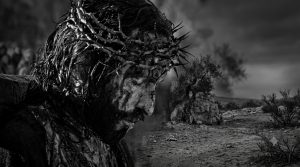
Through Jesus’ sacrifice, God secured every aspect of salvation necessary to restore sinful humanity to Himself. The New Testament describes these accomplishments using several rich terms, each highlighting a different aspect of Christ’s finished work.
Atonement
Christ’s death provided the sacrifice that dealt decisively with sin. His offering accomplished what the Old Covenant’s sacrifices could only foreshadow, obtaining permanent cleansing for those who believe Him (Hebrews 9:11–14, 24–28).
Propitiation
By His death, Christ satisfied the demand of divine justice against sin. Divine justice was not ignored but fully satisfied through Christ’s sacrifice, allowing God to justify sinners while remaining just (Romans 3:24–26).
Redemption
Humanity was enslaved to sin, but Christ paid the ransom through His own blood for our release. Believers are redeemed from the bondage of sin to belong to God (Mark 10:45; Colossians 1:13–14).
Reconciliation
Sin brought enmity between humanity and God, but through the cross, Christ removed the enmity. Those who put trust in Him are brought into peace and restored fellowship with God (Romans 5:1, 10–11; 2 Corinthians 5:18–21).
Justification
On the basis of Christ’s sacrifice, God declares sinners blameless. Justification—God’s judicial act declaring sinners blameless—removes condemnation, and grants those who believe a right standing before God (Romans 5:1, 9; Romans 8:1; Galatians 2:16).
Forgiveness
Through Christ’s blood, God permanently lets sins go as if they were never committed. God no longer holds believers’ sins against them, for Christ has borne our penalty (Matthew 26:28; Colossians 2:13–14).
Adoption
Through Christ, we who were once strangers and enemies have become children of God with all the privileges (John 1:12–13; Romans 8:14–17).
Sanctification Inaugurated
Christ’s atonement also kickstarts believers’ transformation. The Holy Spirit progressively conforms believers to Christ’s image (Romans 6:1–14; Hebrews 10:10, 14; 2 Corinthians 3:18).
Satan’s Defeat
At the cross, Christ decisively defeated satan. Though satan remains active, his ultimate defeat has been secured through Christ’s death (John 12:31–32; Colossians 2:15; Hebrews 2:14–15).
Victory Over Death
Christ’s resurrection assures that death no longer has the final word for those who belong to Him. His resurrection assures our future resurrection into eternal life (John 11:25–26; 1 Corinthians 15:20–26, 54–57).
These truths reveal the completeness of God’s answer to the sin problem through Jesus Christ. Nothing remains to be added to the perfect and sufficient work of Christ.
Receiving God’s Answer To The Sin Problem
However, while Christ’s redemptive work avails for all, its benefits are received only by those who respond to the gospel in faith. Salvation is God’s gracious gift through faith (Ephesians 2:8–9).
The right response to the gospel is repentance—a change of mind toward God, Christ, and sin, which results in a changed direction of life, and faith—wholehearted trust in the person and finished work of Christ.
Through faith, believers are united with Christ. This is the foundation for sharing in every spiritual blessing. Because we are “in Christ,” His death becomes our death to sin, His resurrection becomes the source of our new life, and His righteousness becomes our standing before God (Romans 6:3–11).
Believers also enjoy the assurance of salvation. This assurance rests not on performance but on Christ’s finished work and God’s faithfulness. Believers are assured that nothing can separate us from God’s love in Christ (John 10:27–30; Romans 8:31–39).
God also gives believers His Spirit, who seals and empowers us for godly life. The Spirit bears witness that we are God’s children (Romans 8:14–16), produces spiritual fruit within us (Galatians 5:22–23), equips us for service (John 14:16–17, 26), and guarantees our inheritance (Ephesians 1:13–14).
God’s answer to the sin problem is therefore not merely an objective accomplishment in history; it is a personal reality for everyone who repents and believes the gospel.
The Final Triumph Over Sin
God’s answer to the sin problem transcends the present. Scripture points forward to the cessation of sin when Christ returns.
At His return, Christ will judge all humans in righteousness. Those who reject Him in this life will face eternal judgment, while those who receive Him will enter the fullness of the life He has secured (Matthew 25:31–46; Revelation 20:11–15).
Believers’ resurrection will mark the final victory over death. What began with Christ’s resurrection will be completed as believers receive glorified bodies, free from sin, suffering, and mortality (1 Corinthians 15:42–57).
God will also bring about a new earth with no sin. The effects of the Fall will be totally reversed, and creation itself will be delivered from the curse of sin (Romans 8:19–23; Revelation 21:1).
In that new earth, every consequence of the Fall will cease. Believers will dwell in God’s presence and enjoy perfect fellowship with Him forever. Redemption will reach its glorious completion as God makes all things new (Revelation 21:3–5; Revelation 22:1–5).
From Eden to the new creation, the Bible presents one unified redemption story. God’s answer to the sin problem includes the ultimate removal of sin eternally. God will restore all things to the pre-Fall state.
Conclusion
The Bible’s story is ultimately the story of God’s answer to humanity’s greatest problem. Sin brought guilt, alienation, judgment, and death. But God didn’t leave humanity without hope. From the first promise in Eden to Christ’s finished work and the promise of a new earth, the Bible reveals one consistent and unfolding plan of redemption.
Christ stands at the center of that plan. Through His sacrifice, He accomplished everything necessary for salvation. His work fully satisfies God’s justice and secures eternal forgiveness for all believers.
God’s answer to the sin problem is therefore not found in anything of humans, but in Jesus Christ. Those who receive Him by faith are forgiven, justified, reconciled to God, adopted into His family, and given the sure hope of eternal glory.
God’s promise of redemption made in Eden has been fulfilled in Christ and will one day be consummated in the new heavens and the new earth. All anyone has to do to become part of this life is to repent and believe the gospel. The gospel’s invitation remains open today. Jesus calls people everywhere to repent and believe the gospel.
Mark 1:15:
“The time promised by God has come at last!” he announced. “The Kingdom of God is near! Repent of your sins and believe the Good News!””
Further Reading: