Skip to content

Introduction
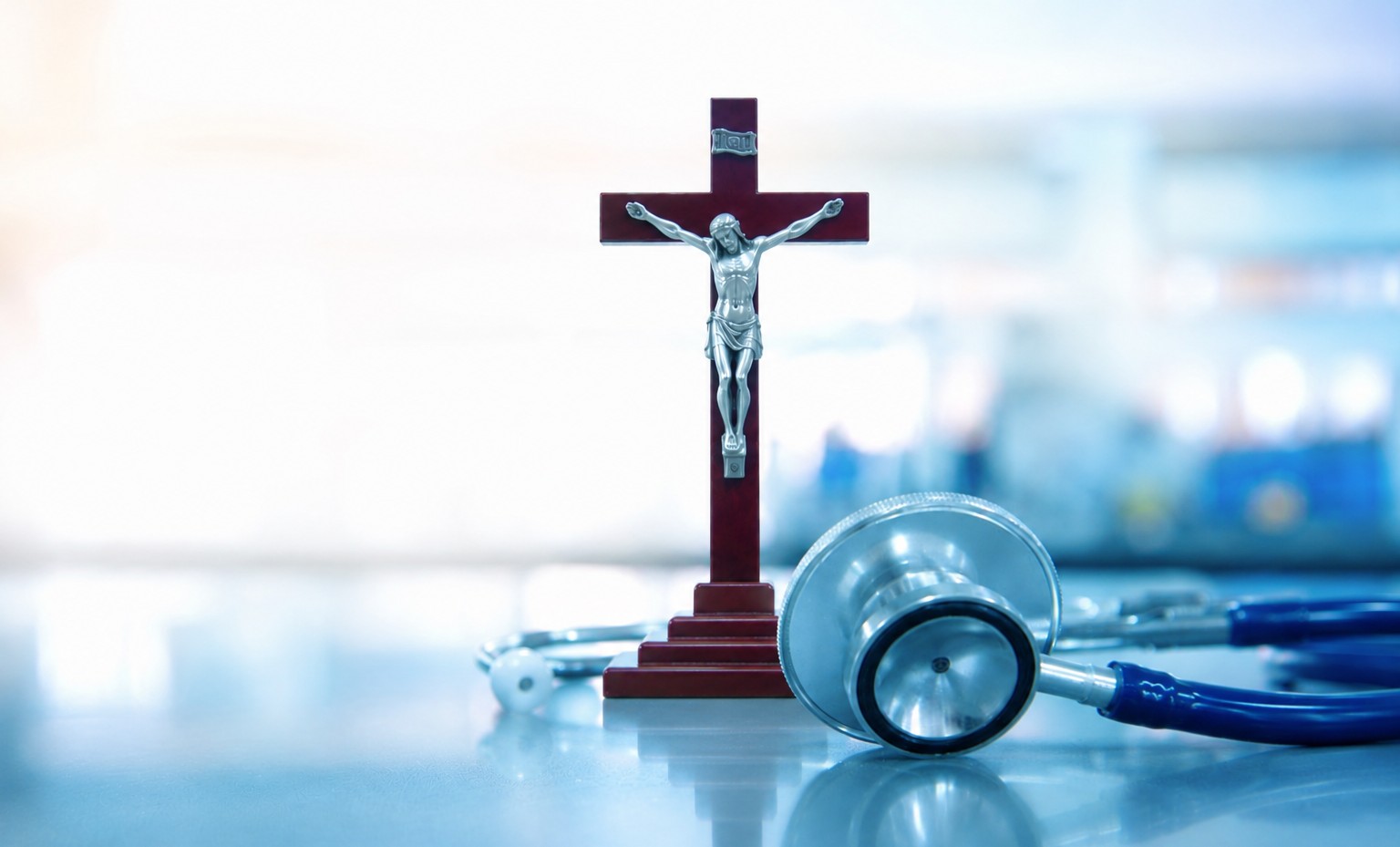
A serious tension exists among Christians on the subject of healing, faith, and medicine. Some strongly oppose seeking medical care, as it indicates weak faith. Others place so much confidence in medicine that God is hardly considered at all. Many Christians, therefore, feel caught in a tension: the faith versus medicine tension.
Someone in my church told the story of his neighbor who had a ghastly motor accident, with his body broken. But his church forbids the use of hospital. Therefore, he was kept at home, while his church organized prayer chain at his home for his healing. He eventually died after about two weeks of pain.
This raises an important question: Are faith and medicine antithetical? Is the Bible against God’s people seeking medical care?
Scripture clearly recognizes God as the source and sustainer of life, and the One who heals and restores His people. God declared to Israel, “I am the LORD who heals you” (Exodus 15:26). Throughout Scripture, healing is consistently associated with God.
However, Scripture records occasions when God worked through ordinary means to heal. This was the case when King Hezekiah was sick (2 Kings 20:1–7). This pattern is observable throughout the Bible. God gives food to all mankind, yet we have to plow the field, plant seeds, and harvest crops.
Therefore, the central question is not “Should believers choose between faith and medicine?” It is “Can God work through medical care to heal just as He works through other ordinary means?”
This article addresses this faith versus medicine tension, by examining the Bible’s teaching about healing, faith, and medical care. We seek to answer a vital question: Does trusting God require rejecting medical help, or can faith and medicine work together under God’s sovereign care?
Recommended: Faith in Your Mouth: 5 Powerful Reasons To Speak Words Of Faith
The Unnecessary Choice: Faith Versus Medicine

Many Christian discussions about healing begin with a mistaken assumption—that believers must choose between faith and medical care. The issue is often framed as an either/or decision: Either trust God or trust doctors. This way, seeking medical care appears to compete with faith.
But Scripture doesn’t present God’s purposes and human agency as opposing. God sometimes accomplishes His purposes through human agencies. God protects. Yet humans still have to take precautions. Human agency does not replace God; it functions within God’s provision.
Scripture shows no conflict between God’s sovereignty and responsible human action. Even in matters of faith, God’s people are expected to act responsibly. When Satan tempted Jesus to jump off the temple’s pinnacle, Jesus answered:
“You shall not tempt the LORD your God.” (Matthew 4:7)
The Bible’s logic is straightforward: trusting God does not eliminate the responsibility to act wisely. Genuine faith never acts rashly. Faith and wisdom work together.
This truth becomes crucial when discussing illness and medical care. When a believer locks his door at night, he is not denying God’s protective power. Likewise, seeking medical care does not automatically indicate a believer’s lack of trust in God.
Scripture consistently presents God as the ultimate source of all knowledge, wisdom, and skill (James 1:17). Thus, it is reasonable to recognize that medical knowledge also originate from God as part of the ordinary means through which He cares for His people.
God Is the Ultimate Source of Healing

Before discussing medical care, we must affirm a foundational biblical truth: God is ultimately the healer. Scripture reveals God as the source of life and healing. Whatever means is used, believers must learn to look beyond the instrument and recognize the One who stands behind it.
God described Himself to Israel saying:
“I am the LORD who heals you” (Exodus 15:26)
This statement reveals something about God’s character. Healing is connected to who He is; it is not merely something He does occasionally. Throughout Scripture, God repeatedly reveals Himself as compassionate toward the suffering of His creations.
King David commanded his soul to praise God, “who forgives all your iniquities, who heals all your diseases” (Psalm 103:2–3). This connection is significant. God cares for our spiritual condition as well as our physical condition. Scripture presents us as whole persons whose physical and spiritual conditions matter to God.
The earthly ministry of the incarnate God—Jesus—reinforces this truth. The healing of those afflicted with various diseases was central to His ministry. He went about preaching the gospel of the kingdom, “and healing all kinds of sickness…among the people” (Matthew 4:23).
The healings were not merely demonstrations of power; they revealed God’s concern for human suffering. Jesus never treated sickness as something beneath His concern. People went to Him with physical needs, and He responded with mercy.
The New Testament also exhorts believers to pray when facing illness (James 5:14). Therefore, recognizing God as healer is not optional for Christians. It is a central revelation of God which must govern our hearts and minds. We should never go through illness as if God is absent from the process.
However, recognizing God as healer does not automatically answer the question of how He heals.
At times God heals miraculously and instantly. Yet God does not only work through extraordinary interventions. Sometimes He heals gradually, working through the body’s natural processes, or through medical knowledge and skills.
The important distinction is this: believers must not confuse the means of healing with the source of healing. The Bible’s emphasis is not merely on how healing comes but on who ultimately stands behind every act of restoration.
God is the ultimate source of healing. He only sometimes works through ordinary means to heal.
Biblical Evidence That God Works Through Medical Care

If medical care is incompatible with faith, we would expect to find clear warnings against its use in Scripture. Instead, the Bible provides instances where medical care or remedies appear alongside faith.
Paul’s Advice to Timothy
One of the clearest examples appears in Paul’s instruction to Timothy. Apparently, Timothy had a persistent health condition. And, Paul’s counsel is noteworthy. He did not simply advise faith. Instead, he said:
“No longer drink only water, but use a little wine for your stomach’s sake and your frequent infirmities.” (1 Timothy 5:23)
In ancient times, wine was frequently used in medical care. It must have been proven to possess medical value.
This statement is significant because it came from no other person than the apostle Paul—a man who taught about faith with such powerful conviction, and demonstrated unusual healing exploits (Acts 19:11–12).
Still, he recognized the place of practical care, demonstrating that belief in divine healing and the use of meeical care are not mutually exclusive.
Jesus’s Parable of the Good Samaritan
Jesus told a parable of a Samaritan who cared for a man severely wounded by robbers (Luke 10:30–36). He bandaged his wounds, and poured on oil and wine. The parable was about neighborly love, but those details are significant. The Samaritan did not simply pray over the wounded. He applied practical remedies.
Before Jesus’s time, oil and wine had been used in caring for wounds. Remarkably, instead of condemning their use, Jesus used them in His parable. He could easily have omitted those details if they were incompatible with faith in God.
Luke the Physician
In the New Testament, there was a disciple named Luke—the author of the Gospel of Luke and the book of Acts, whom Paul referred to as “the beloved physician” (Colossians 4:14).
This brief description is significant. Luke was a doctor. Yet, Paul did not mention his occupation with contempt, as if spiritually inferior or incompatible with Christian ministry. Paul could have easily omitted that detail, if medical practice itself were contrary to faith.
In fact, Luke was one of Paul’s close companions and participated in the apostolic work. There is no suggestion that he abandoned medical skill in order to follow the faith path, or that his profession competed with God’s power. He might even have given medical care to Paul on occasions.
Luke’s life demonstrates that believers possessing medical skill is not antithetical to faith.
God Frequently Works Through Means
Throughout Scripture, God used ordinary means to accomplish extraordinary purposes. When Hezekiah fell ill, God promised him healing. Yet the prophet Isaiah did not merely pray. He advised the use of practical remedy:
“Make an ointment from figs.” So Hezekiah’s servants spread the ointment over the boil, and Hezekiah recovered!” (2 Kings 20:7 NLT)
This pattern of God working through ordinary means appears throughout Scripture. He fed Elijah through ravens (1 Kings 17:4–6). He sustained Israel in the wilderness through manna. In each case, God’s power remained the source even though visible instruments were involved.
The broader logic of Scripture therefore becomes clear: practical remedy is not anti faith. Using remedies or benefiting from medical breakthroughs does not necessarily indicate absence of trust in God.
When Faith And Medicine Clash
Scripture doesn’t treat medicine as evil, yet it is not silent about its potential dangers. Scripture repeatedly reveals that God’s good gifts tend to get corrupted by humans. Medicine in itself is not sinful. Yet sinful humanity has ability to use God’s good gifts sinfully.
The problem usually arises at two opposite extremes: trusting medicine more than God and rejecting practical remedies in the name of faith.
Trusting Medicine More Than God
Humans often tend to place trust in visible things—wealth, political power, or military strength—more than in God. In this way, the use of medicine can become sinful. Scripture gives a striking example in 2 Chronicles 16:12:
“And in the thirty-ninth year of his reign, Asa became diseased in his feet, and his malady was severe; yet in his disease he did not seek the LORD, but the physicians.”
Some cite this passage to argue against Christians consulting doctors. But contextually, the rebuke was not about Asa consulting physicians, but about placing ultimate trust in them, such that he never sought the Lord.
Throughout his life, Asa had witnessed God’s faithfulness. Yet, at this point, he relied entirely on human means while neglecting the One who had sustained him. Therefore, the rebuke was because of his heart posture, not medicine itself.
Medicine therefore can become an idol when it is treated as the ultimate hope. Doctors diagnose diseases, prescribe treatments, and perform procedures, but they have limits. Even the most advanced medical systems cannot guarantee outcomes.
Psalm 20:7 reminds us:
“Some trust in chariots, and some in horses; But we will remember the name of the Lord our God.”
The believer’s ultimate trust should not be in medical care. While seeking treatment, our trust must be in God ultimately. Seeking treatment while excluding God altogether reflects a wrong spiritual posture.
Rejecting Practical Remedies in the Name of Faith
This opposite extreme is equally dangerous. Some believers assume that faith requires refusing medical care. They think accepting treatment is evidence of weak faith.
However, biblically, faith does not act passively, rashly, or foolishly. During Jesus’s temptations, satan urged Him to jump off the temple’s pinnacle and expect angelic protection. But Jesus answered:
“You shall not tempt the LORD your God.” (Matthew 4:7)
What many believers do many times in the name of faith amounts to tempting God. Yet, there is a clear difference between faith and presumption.
Faith trusts God’s character and wisdom. Presumption takes unnecessary risk while expecting God to remove the consequences. For example, a believer refusing food while expecting God to sustain him.
Proverbs 27:12 says:
“The prudent sees danger and hides himself, but the simple go on and suffer for it.”
We should not think that faith and practical actions are opposed. God works through means: food nourishes the body, sleep restores strength, and knowledge benefits human life. Refusing available means of healing does not indicate stronger faith.
The Bible provides a balanced: believers should neither idolize medicine nor reject it. Seeking medical care without God leads to misplaced confidence. Rejecting practical remedies in the name of faith can lead to avoidable harm.
Living in the balance of faith and wisdom means trusting God completely while making use of the means He may provide.
What Should Believers Do When Facing Illness?

We come to a crucial matter: What should believers do when facing illness? Scripture does not provide a rigid formula for every medical situation, but it does provide principles that can guide us toward a wise and God-centered response to illness.
Seek God’s Face
A believer’s first response to illness should not be panic or self-reliance, but seeking God’s face in prayer (Philippians 4:6)
Illness often creates uncertainty, and uncertainty produces fear. Yet Scripture invites us to pray, not to wallow in fear. The apostle James writes:
“Is anyone among you sick? Let him call for the elders of the church, and let them pray over him…” (James 5:14)
For believers, prayer is not a last resort after other options have failed. It is the first and continuous response throughout the illness. This demonstrates that even when medical resources are available, our trust ultimately lies in God.
Seek Wise Counsel
Scripture also instructs believers to act wisely not impulsively. Proverbs 11:14 says:
“Where there is no counsel, the people fall; but in the multitude of counselors there is safety.”
Medical decisions can at times be complex. Treatments may involve risks. Alternatives may exist. Thus, seeking qualified counsel is wisdom. This include speaking with healthcare professionals, seeking counsel from spiritually mature believers, and carefully considering available information.
Faith does not require ignorance.
Use Available Means Responsibly
We have established that God works through ordinary means. Therefore, believers should not think that accepting treatment automatically indicates faithlessness. Medicine, surgery, therapy, and other forms of care may become means through which God provides restoration.
However, medical care should be received only from qualified personnel. Believers should be careful of patronizing quacks. That may result in greater damage to our health.
Trust God Regardless of the Process
Perhaps this is the hardest part. Believers often pray expecting healing, and Scripture certainly encourages faith in God’s power. But God does not always answer according to human expectations.
The apostle Paul prayed concerning the “thorn” in his flesh, but instead of removing it, God’s answer was:
“My grace is sufficient for you, for My strength is made perfect in weakness.” (2 Corinthians 12:9)
Paul’s response reflects what believers attitude to outcomes that don’t go as we expect should be. He says:
“…Therefore most gladly I will rather boast in my infirmities, that the power of Christ may rest upon me… For when I am weak, then I am strong.” (vv.9-10)
Faith is not merely confidence that God will act exactly as we desire. It is also trusting God’s wisdom, goodness, and sovereignty even when things don’t go as expected.
A believer may experience instant healing. Another may recover gradually through medical care. In each situation, the foundation remains unchanged: God’s faithfulness does not depend upon the method, timing, or outcome.
Ultimately, faith does not mean rejecting practical remedies. Believers can maximize every help that God provides, while trusting Him ultimately.
Conclusion: There Is No Faith Versus Medicine

The question that has guided this study is straightforward: Is the Bible against seeking medical care? Is the Christian life a faith versus medicine life? At this point, the answer is clearer.
Scripture consistently presents God as the source of life, sustenance, and restoration. From the Old to the New Testaments, God’s people are repeatedly called to trust in His power and care.
At the same time, the Bible never portrays medical care as antithetical to faith. We have seen examples of believing physicians, practical remedies, and ordinary means being used by God. We have also seen warnings against trusting human resources while neglecting God.
The issue, therefore, is not medicine itself; it is where the believer’s trust ultimately rests.
Believers should remember that God is sovereign. He may choose to heal supernaturally, through the body’s natural processes, or through medical care. Since all wisdom, knowledge, and beneficial gifts come from God (James 1:17), we need not create a conflict where Scripture does not create one.
Faith neither requires refusing medical care, nor does it permit replacing God with medicine. Believers should live in the balance of faith and wisdom. We must trust God while acting responsibly. We must stop asking the wrong question: “Should I choose faith or medicine?” and begin asking a different question:
“How can I trust God faithfully while making wise use of the means He has provided?”
When understood this way, the faith versus medicine tension ceases. The two become part of a larger reality in which God, in His wisdom and mercy, cares for His people through both extraordinary and ordinary means.