Skip to content

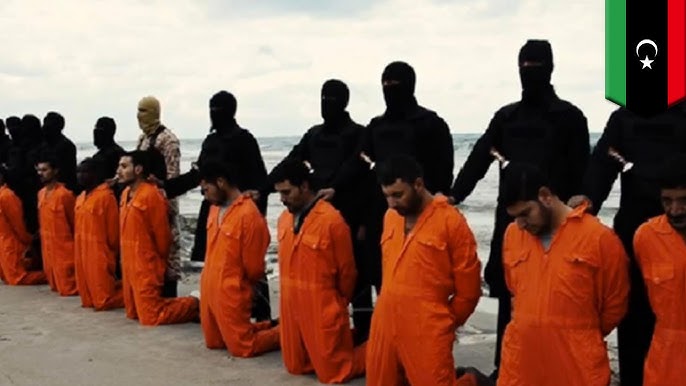
On February 15, 2015, twenty-one Egyptian Christians were martyred by ISIS on a beach in Libya because of their refusal to renounce their faith. Now, this Is just one of the many cases of the persecution of Christians happening daily around the world. From the birth of the Church, Christians in all generations have been subjected to persecution—jailed, tortured, deprived of social rights, even killed, and their only crime has been following Christ.
These occurrences highlight a hard truth: Faith in Christ is costly. Following Christ is dangerous. And, the cost of faith is suffering—not suffering because of poor choices or because we live in a broken world, but specifically because of allegiance to Christ. Christ Himself made this unmistakably clear in Matthew 24:9:
““Then they will deliver you up to tribulation and kill you, and you will be hated by all nations for My name’s sake.”
This aspect of the Christian life makes our faith unappealing. Being justified, receiving the Spirit, experiencing the supernatural, etc, are appealing. But suffering for Christ is not! Yet, it is an integral part of the Christian calling (2 Timothy 3:12).
While this doctrine has been relegated today, even totally eliminated in some places, it is a crucial part of Christian training. The early Christians were taught to expect to suffer (1 Peter 4:1). Suffering for Christ is deeply tied to what it means to identify with Christ.
This article is a recovery of the doctrine of suffering for Christ as the cost of faith. It examines serious issues like why following Christ attracts suffering, how God uses persecution to serve His higher purposes, and what believers’ response should be to suffering for Christ.
We are not considering generic suffering (I have an article on that here), but specifically the suffering that comes as a direct result of allegiance to Christ. We will also see God’s sustaining grace in persecution. Because though the cost of faith is real, yet so is the grace that sustains believers.
WHAT DOES IT MEAN TO SUFFER FOR CHRIST?
At its core, suffering for Christ is suffering that comes specifically because of one’s identification with Christ and consecration to righteousness. In Matthew 5:10–11, Jesus says:
10 Blessed are those who are persecuted for righteousness’ sake… 11 Blessed are you when they revile and persecute you, and say all kinds of evil against you falsely for My sake.
Two crucial issues stand out from these verses:
1. It Is for Righteousness’ Sake
Suffering for Christ is not suffering as a result of wrongdoing or poor judgment (1 Peter 4:15–16). Not all suffering carries spiritual significance. If hardship comes as a result of sin or poor judgment, it is consequence, not persecution. True persecution is tied to living according to God’s will.
2. It Is for Christ’s Sake
Suffering for Christ is deeply grounded in relationship with Jesus. One can’t suffer for Christ unless he belongs to Him. Christians are persecuted because we identify with Christ. The world’s posture toward us ultimately reflects its posture toward Christ (John 15:18).
Suffering for Christ vs. General Suffering
Suffering is part of life in a fallen world (Romans 8:22), which all humans experience. But suffering for Christ is a direct result of living for Christ in a fallen world. This kind of suffering is not random—it is connected to intentional, visible allegiance to Christ.
Suffering for Christ takes different forms. It includes:
- Rejection by family and friends.
- Verbal hostility.
- Social rejection or exclusion.
- Misrepresentation and false accusations.
- Institutional or systemic discrimination.
- In many cases, physical harm or death.
The common denominator of all these forms is the root cause: allegiance to Christ.

WHY DO CHRISTIANS SUFFER PERSECUTION?
One of the pressing questions that comes up in discourses about Christian persecution is why do Christians suffer? Why does the decision to follow Christ attract opposition and suffering? And, Scripture gives many, interrelated reasons why the followers of Christ suffer persecution.
1. Belonging To Christ
This is the most foundational reason why Christians are persecuted. Jesus says in John 15:19:
“If you were of the world, the world would love its own. Yet because you are not of the world, but I chose you out of the world, therefore the world hates you.”
Persecution, at its core, is not first about us; it is about Christ. The hostility that Jesus suffered did not end with Him; it continues today toward those who bear His name. To belong to Christ is to become partaker in His suffering.
2. Believers’ Lives Condemns The World
The Christian’s life of righteousness exposes and condemns the sinful world. Those who practice evil hate the light, because the light exposes (John 3:20).
Sometimes, persecution arises against us because of what our lives represent. A consecrated life convicts and unsettles sinners, even without words. Therefore, they persecute those whose lives are consecrated to Christ. Apostle Peter says in 1 Peter 4:4:
“Of course, your former friends are surprised when you no longer plunge into the flood of wild and destructive things they do. So they slander you.” [NLT]
The more intense one’s consecration, the fiercer opposition becomes (2 Timothy 3:12). The world loves compromisers. But when a believer refuses to conform to sinful norms, speaks unpopular truth, and insists on holiness in a sinful culture, they inevitably attract persecution, even from compromising Christians.
3. Spiritual Warfare
Persecution has a deeper, spiritual dimension. In Ephesians 6:12, Paul reminds believers that we are not fighting against humans, but against evil spiritual forces.
Behind the visible oppositions against us is an invisible conflict: the kingdom of darkness resisting the advancement of the kingdom of God. Thus, believers are naturally threats to darkness. This helps us maintain a healthy perspective: people are not ultimately the enemy; there is a spiritual resistance at work.
Knowing all these does not remove the pain of persecution, but it does helps us to stand firm with clarity, conviction, and hope. Christian persecution is not unusual. It is part of following Christ in a world that hates Him. Apostle Peter, in 1 Peter 4:12, says:
“Beloved, do not think it strange concerning the fiery trial which is to try you, as though some strange thing happened to you.”
THE PATTERN OF BELIEVERS’ SUFFERING
Scripture presents Christ as the sole pattern for Christian living—in love, prayer, service, obedience, and also in suffering.
1 Peter 2:21:
“For to this you were called, because Christ also suffered for us, leaving us an example, that you should follow His steps.”
Peter says that suffering is one of the footsteps that Christ left for believers to follow. Scripture clearly says that His suffering was not for any wrongdoing (1 Peter 2:22; 2 Corinthians 5:22). He suffered by the Father’s will (John 10:17–18), and in so doing, left us an example to follow.
Therefore, we are to live ready to suffer as Christ did. Peter exhorts, in 1 Peter 4:1:
“Therefore, since Christ suffered for us in the flesh, arm yourselves also with the same mind…”
What mind? To suffer, as Christ did. This is the cost of faith—an integral part of our calling. Christianity is not just about believing in Christ, it is also about suffering for Christ (Philippians 1:29). If He suffered, we should expect to suffer. To walk with Christ is not only to share in His life, but also in His suffering (John 15:20).
For the umpteenth time, this is the cost of faith. This is the price that all who have walked faithfully with God in history have paid, from the Old Testament’s prophets (Matthew 5:12) to the apostles and the first Christians (Acts 4:17–18; 5:18; 7:57–59).
This offers a quiet comfort when we face persecution: we are not alone. We stand in a long line of those who have walked faithfully with God, and suffered because of it. Their own endurance testifies to a deeper reality: the cost of faith may be heavy, but so is God’s sustaining grace.

HOW PERSECUTION SERVES GOD’S HIGHER PURPOSES
While persecution is stirred up by God’s enemies against His people and redemptive plan, God hijacks it to achieve higher purposes. As Romans 8:28 says, that God causes everything to work together for the good of His children.
1. Refining Faith
Persecution reveals the genuineness of faith. It exposes what is real and what is not. It strips away superficiality and reveals whether faith is grounded in conviction or in convenience.
1 Peter 1:6–7:
6 In this you greatly rejoice, though now for a little while, if need be, you have been grieved by various trials, 7 that the genuineness of your faith… may be found to praise, honor, and glory at the revelation of Jesus Christ.
Just as fire refines gold, persecution refines faith—removing impurities and strengthening what remains.
2. Conformity To Christ
Persecution draws believers into deeper conformity to Christ. We are made like Him, not only in His life, but also in His suffering. Philippians 3:10 speaks of the fellowship of Christ’s suffering:
“That I may know Him and the power of His resurrection, and the fellowship of His sufferings, being conformed to His death.”
Certain aspects of Christ’s character: His humility, endurance, and submission to the Father, are most deeply formed in suffering. While suffering is not the goal, God uses it to shape us into His Son’s likeness.
3. Witnessing to the World
Persecution often serves as powerful testimony. Believers’ steadfastness in persecution projects the picture of deep conviction to the world. Jesus, speaking of our persecution, says in Luke 21:13:
“But it will turn out for you as an occasion for testimony.”
In church history, some of the most compelling witness of the gospel have happened in presecution. I read that one of the Egyptian Christians martyred by ISIS was initially not a Christian. But before the execution, he believed, seeing the boldness of those believers as they faced death.
4. Eternal Reward
Scripture provides an eternal perspective of persecution. Jesus said:
“Rejoice and be exceedingly glad, for great is your reward in heaven.” (Matthew 5:12)
Suffering for Christ has eternal scope. What is endured now for Christ’s sake, echoes into eternity (2 Corinthians 4:17; 1 Peter 4:12–13).
5. Deepening Dependence on God
Persecution dismantles self-reliance. When worldly acceptance are withdrawn, and circumstances turn hostile, believers are driven to depend more fully on God. Paul reflects this in 2 Corinthians 1:8–9. What feels like loss can become an immersion into deeper intimacy with God—where trust is becomes practical.
Now, understanding these purposes does not lessen the pain of suffering, but it gives it meaning. 1 Peter 4:14 calls us blessed, if we are reproached for the name of Christ.
And, Scripture assures us of something deeper: God is never unconcerned about our suffering.
He is present in it.
He is sustaining us in it.
And, He is working through it to accomplish His higher purposes.
That truth gives strength, not just to endure suffering for Christ, but to endure it with hope.
THE SPIRITUAL DANGERS THAT ACCOMPANY PERSECUTION
Persecution can result to serious spiritual damages. The pain of suffering often produces internal struggles that, if left unchecked, can quietly erode a believer’s spiritual stability.
Let’s examine the key dangers.
1. Bitterness
When persecuted, there is a strong temptation to internalize offense. The heart can shift from love to resentment toward people. Hence, the warning for us in Hebrews 12:15, to watch against bitterness. It feels justified, but once it takes root, it pollutes the soul and undermines what God is doing in us.
2. Resentment Toward God
Another danger is misdirected frustration toward God Himself. Suffering can cause a shift from trust to disappointment, frustration and anger. This is often subtle, happening internally.
Scripture states what our posture should be:
1 Peter 4:19:
“Therefore let those who suffer according to the will of God commit their souls to Him in doing good, as to a faithful Creator.”
The word “faithful” there means that, even in suffering, God’s character remains unchanged. Therefore, He can be trusted even in our suffering.
3. Unbelief
Persecution can also provoke subtle unbelief. Unbelief rarely begins as outright rejection; it often starts with questions:
“If God is good, why is this happening?”
“Why is obedience leading to suffering instead of blessing?”
If the questions are not anchored in truth, they drift into doubt about God’s character and faithfulness. Scripture cautions us about unbelief (Hebrews 3:12).
4. Isolation
When a believer is hurt, the natural instinct is to isolate and shield oneself from further hurt. But this is dangerous. Scripture warns against forsaking the assembling of ourselves together (Hebrews 10:25).
Persecution should drive believers deeper into fellowship and mutual strengthening. When we withdraw, we often lose the very support God has provided for our sustenance.
5. Backsliding From The Faith
In the face of suffering, we can be tempted to renounce the faith once held dearly, in order to end suffering. But while this may temporarily end suffering, it opens us up to eternal suffering. We must endure to the end, holding fast our conviction ().
A Call to Watchfulness
Persecution is not only a test of endurance; it is a test of the heart. We can be standing outwardly while inwardly declining: living with bitterness, without joy, or tenderness toward God and people. This is why Scripture commands us to guard our hearts diligently (Proverbs 4:23).

RESPONDING TO PERSECUTION LIKE A CHRISTIAN
For believers in Christ, persecution is inevitable. It will come. It is the cost of faith. This truth can never be overemphasized. Suffering for Christ is the cost of faith in Christ. But how we respond to it shapes what it does to us—deepen love or harden us, reinforce faith or weaken it, draw us closer to God or distance us from Him.
Then, how should a Christian respond to persecution? Scripture provides clear, practical guidance for us.
1. An Attitude of Joy
Jesus commanded us to respond with joy, not revenge (Matthew 5:11–12). Revenge feels natural, but it is never Christ’s way. A response of love and grace testifies to God’s Spirit in us (1 Corinthians 4:12–13).:
The apostles echo this attitude of rejoicing in suffering (1 Peter 4:13). The joy is not that we are suffering—no one is happy in suffering, but that we are counted worthy to suffer for Christ.
The early Christians’ response to persecution is striking: they rejoiced at being counted worthy to suffer for Christ (Acts 5:41). They had a radically different perspective: persecution is not a misfortune; it is a privilege tied to faith in Christ.
2. Being Steadfast
Persecution is a test of endurance. Even the strongest of believers can bulk under the pain of suffering. Hence, the Apostle’s exhorta- tion to be steadfast (1 Peter 5:8–9; 2 Peter 3:17). Being steadfast is holding fast to God’s calling and promises, even when the world persecutes us.
3. Love and Pray for Your Persecutors
Christ raised the bar of how to respond to persecution so high in Matthew 5:44, when He said:
“But I say to you, love your enemies, bless those who curse you, do good to those who hate you, and pray for those who spitefully use you and persecute you.”
This is completely antithetical to the natural instinct to hate our enemies, and perhaps the hardest, yet most spiritually powerful response to persecution. Loving and praying for our persecutors glorify God, witness to the Spirit’s transformative power, and show the enemy the higher ground that Christianity occupies.
4. Commit Yourself to God
In times of persecution, believers must place themselves fully in God’s hands. That is the only place we can find comfort and security in the time of persecution.
1 Peter 4:19:
“Therefore let those who suffer according to the will of God commit their souls to Him in doing good, as to a faithful Creator.”
Believers must trust God in our suffering, recognizing that He sees us, is present and walking with us in our suffering, and can be trusted to bring His purpose to pass, despite our suffering. Even when our suffering feel unjust, believers should rest in God’s faithfulness.
5. Encourage One Another
A time of persecution is a time for believers to bond with one another more deeply, giving encouragement and strength to one another (Hebrews 10:25).
The Christian life is a shared life. The body of Christ exists to encourage, pray for, and bear one another’s burdens (Galatians 6:2). Community can transform the weight of suffering into shared testimony.
6. Keeping An Eternal Perspective
An eternal perspective does not eliminate the pain of suffering; it reframes it in light of future glory. Scripture directs believers’ attention beyond present pain to our eternal reward (Matthew 5:11-12; 2 Corinthians 4:17).
This transforms persecution from meaningless loss to purposeful investment. What is endured now for Christ’s sake resonates into eternity. This produces resilience—the ability to stand firm in the face of persecution. Ultimately, it fuels hope (Romans 8:18).
ENCOURAGEMENT FOR THE PERSECUTED
Facing persecution is never easy. The pain can be overwhelming. Yet Scripture provides us with comfort and encouragement.
1. God Is With You
God does not leave His children to suffer alone. He is with us. His promise in Matthew 28:20, “I am with you always, even to the end of the age…” is not a theoretical promise. It is a practical reality. He sees and sustains those who suffer for His name.
2. You Are Not Alone
Persecution can feel isolating. But you are part of a global family and a long lineage of faithful believers who have endured, and are enduring, trials (1 Peter 4:12).
3. It Is Never Wasted
Suffering for Christ is never wasted. God uses it to refine us, deepen intimacy, and bear witness to His power (Romans 5:3–4). He is working behind the scenes to produce spiritual fruit that lasts.
4. The Glory That Awaits
Perhaps the most sustaining hope in persecution comes from eternity. Suffering is temporary, but the reward for faithfulness is eternal (Romans 8:18). Suffering for Christ is painful, but the reward far exceeds the pain.
Beloved brethren, do not lose heart. Your suffering is the cost of faith in Christ. Stand firm, rejoice in your trial, and trust in God’s faithfulness.
The cost of faith in Christ is persecution. But within that cost is a profound assurance: you are walking with the Savior and a whole cloud of witnesses, and being shaped into Christ’s likeness. Suffering for Christ is not meaningless—it is sacred, purposeful, and, ultimately, redemptive.
Further Resources:
Desiring God—Why Do Christians Suffer?