 Skip to content


Death is one subject that many don’t like to talk or think about— even Christians. In the early days of our marriage, my wife sternly resist talks about death in our home. It is as if that will bring death. Thankfully, she has greatly changed over the years through consistent exposure to the true word of God.
Still, this is a problem for many. They avoid talks or thought about death, as if that will stop death altogether. But Scripture teaches that it is wisdom for men to consider their end (Deuteronomy 32:29). Death is inevitable. It is the ultimate end of humans (Hebrews 9:27). Coming to terms with this brings a whole shift to perspectives of life and how we live.
Whether or not we talk or think about death, we will die. The fear of death is useless. It does not stop death. Rather, the fear of death puts people in bondage—to Satan and to false prophets. Hebrews 2:15 says that Jesus tasted death for all humans, so that through His own death, He might free those who are in bondage through fear of death
As Christians, the right approach is to gain the right understanding of death through Scripture; to understand death in the light of our redemption through Christ. This will help us to find comfort when we lose loved ones, and help us be ready for when our own time will come. Because as believers, we do have hope beyond the grave.
The Problem of Death in a Fallen World
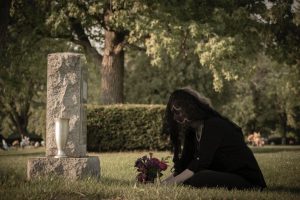
Death was never part of God’s design for humanity from the beginning. It entered the world as a direct consequence of sin (Romans 5:12). In Genesis 2:17, God warned man to not eat of the tree of the knowledge of good and evil, “for in the day that you eat of it you shall surely die.” Death is not merely a biological end but a spiritual disruption of God’s perfect design for man.
In a fallen world, death is a source of terror. And, this terror is natural, because death is both mysterious and inescapable. It represents separation from life, from loved ones, and from all that is familiar. Humans are terrified, because though we are aware of the finality and power of death, yet we feel powerless against it.
However, it is crucial to point out that the believer and the unbeliever do not experience death the same way. The unbeliever faces death as the inevitable end of the present life and as an eternal judgment. But for the believer, through union with Christ, death is no longer a threat or the ultimate end of life. It is a passage into the eternal presence of God. This distinction is crucial to understanding why Christians should not accommodate fear of death, but face it courageously and with hope.
Recommended: Growing Up Spiritually: 10 Crucial Reasons for Christian Growth
Hope Beyond the Grave
Interestingly, like unbelievers, believers also have the fear of death. This fear often springs from a limited understanding of the gospel. While natural instincts might create anxiety about death, theologically, the believer has no reason to fear death. Because through Christ’s triumph, we have obtained victory over death even before it arrives. Paul addressed this in 2 Timothy 1:8–10:
8 Therefore do not be ashamed of the testimony of our Lord, nor of me His prisoner, but share with me in the sufferings for the gospel according to the power of God, 9 who has saved us and called us with a holy calling, not according to our works, but according to His own purpose and grace which was given to us in Christ Jesus before time began, 10 but has now been revealed by the appearing of our Savior Jesus Christ, who has abolished death and brought life and immortality to light through the gospel.
Fear of death in believers contradicts the revelation of the finished work of Christ. The death and resurrection of Christ, which we have become partakers of through our union with Him, radically changes how we view and relate to death. We ought not to view death with trepidation as a powerful enemy which is waiting to finish us off someday.
Paul says that Christ, by His incarnation, has abolished death. To abolish—Greek katargeō, is to cause a thing to have no further efficiency, to deprive of force, influence, or power. This is not saying believers will never die, but that death has been stripped of its power, so that though we, being also humans, will taste death, still we have hope beyond the grave—hope of an eternal life in the presence of our God.
Believers ought to view death as a weak enemy which Christ has stripped it of its power, which therefore we do not have to fear. The fear of death among Christians reflects incomplete appropriation of redemption. The writer of Hebrews shows that one of the purposes of Christ’s death was to destroy him who had the power of death, that is, the devil.
Hebrews 2:14-15:
14 Inasmuch then as the children have partaken of flesh and blood, He Himself likewise shared in the same, that through death He might destroy him who had the power of death, that is, the devil, 15 and release those who through fear of death were all their lifetime subject to bondage.
We should distinguish between natural instinct (the instinctive discomfort at leaving life) and spiritual fear (distrust in God’s promises). Christians may experience anxiety and grief about death—how it will happen, having to leave loved ones, but these do not justify a spiritual fear that undermines trust in God’s Word. Fear of death in believers betrays distrust for God. Recognizing this distinction allows believers to live in the assurance that death is no longer an ultimate threat.
Christ’s Resurrection: A Decisive Victory Over Death

Believers have hope beyond the grave. And, the bedrock of this hope is Christ’s own death and resurrection. In 1 Corinthians 15, Paul, by the Holy Spirit, explains Christ’s triumph over death in His resurrection, and what it means for us, that Christ’s triumph over death has become our own triumph over death. 1 Corinthians 15:55–57 celebrates this victory.
55 O Death, where is your sting? O Hades, where is your victory? 56 The sting of death is sin, and the strength of sin is the law. 57 But thanks be to God, who gives us the victory through our Lord Jesus Christ.
Christ’s death was both vicarious and victorious. As the Second Adam, He tasted death, not as punishment for His own sin—because He had no sins (1 Peter 2:22–23), but as the means through which the power of death would be destroyed. Apostle Paul says in Romans 6:9:
“Knowing that Christ, having been raised from the dead, dies no more. Death no longer has dominion over Him.”
Through the resurrection, God made a public statement that death has been stripped of its power. Christ’s death and resurrection are not casual events but the decisive blows that God dealt death and the grave. Through Christ’s triumph, death is no longer the ultimate enemy. It is a conquered foe, a servant of God’s redemptive plan.
Grasping Christ’s triumph over death reveals the wider significance of redemption. Christ’s triumph assures that all who are united to Him through faith share in this triumph over death. The words of Christ in John 14:19 is so assuring and comforting. He says:
“A little while longer and the world will see Me no more, but you will see Me. Because I live, you will live also.”
Three crucial things are noteworthy here. First, by “a little while longer and the world will see Me no more”, Christ was foretelling His death, whereby He would be cut off for a time, to the disciples. But He also foretold His resurrection. He said, “but you will see Me”. Third, He foretold what His resurrection implies for we who follow Him: “Because I live, you will live also.”
Christ’s triumph over death assures believers of our own triumph over death. Because we must transition from this doomed world, we will taste death. But that is not our ultimate end. We have hope beyond the grave. We will live, just as Christ lives. We are not facing death alone, nor are we facing it as a force that can claim ultimate victory.
The Believer’s Death in the Light of Redemption
Fundamentally, death for the believer is different from death for the unbeliever. Where both stand with respect to redemption is the basis for this distinction. The believer, through faith in Christ, is standing in redemption—redeemed, and under the covering of the provisions of redemption (Galatians 3:13; 1 Peter 1:18). The unbeliever is standing outside of redemption—unredeemed, and without the covering of the provisions of redemption.
This singular factor—redemption—differentiates where each person stands with respect to death, and how each faces death. For the believer, through Christ’s triumph in His resurrection, death is stripped of its punitive character and becomes a passageway into God’s glorious presence. Paul affirms in Philippians 1:21:
“For to me, to live is Christ, and to die is gain.”
This statement of Apostle Paul highlights the believer’s worldview and mindset: death is a gain, not a loss. Paul says in verses 23 that he was hard-pressed between departing to be with the Lord and staying back to serve the saints more. But he expressed which of the two that he greatly longed for—to go be in the eternal presence of his Savior. He called this far better!
For believers who have truly grasped the depth of the redemption which they have in Christ, death is not a thing to be feared, nor is the hour of death a moment to be dreaded, but a moment to be looked forward to with eagerness. Because, for the believer, death is the culmination of our salvation.
Salvation is in three phases. First is the salvation which occurred when we first believed, where God saved us from the penalty of sin. Second is the salvation which is happening presently daily, where God is saving us from the power of sin. The third and the completion the salvation which will happen in the future, when God will save us from the presence of sin. (Click here to learn more about this.)
Now, death is the beginning of the final phase of our salvation. In death, we depart from this world where sin and things that cause sin exist.
Also, death is our liberation from the prison of this weak and sickly body of flesh. The Apostle Paul explains this extensively in 2 Corinthians 5:1–5. Our present body is like a prison that keeps us (our regenerated spirit) caged. But in death, we shall shed this body and receive a new body that is not limited by space and time, and not affected by sickness, and weakness.
This is the perspective of death that the foremost Christians had that enabled them to defy tortures and horrific executions in their time. Through this lens, fear of death is not only unnecessary—it is inconsistent with the reality of Christ’s finished work. As believers, our death is a participation in Christ’s triumph, not a defeat. We sure have hope beyond the grave.
What Happens When Believers Die
The Bible teaches that upon death, believers immediately enter the presence of Christ. In 2 Corinthians 5:8, Apostle Paul, through the insights given to him, expressed this idea:
“Yes, we are fully confident, and we would rather be away from these earthly bodies, for then we will be at home with the Lord.” [NLT]
Also, Paul expressed the same idea in Philippians 1:23:
“I’m torn between two desires: I long to go and be with Christ, which would be far better for me.” [NLT]
Upon death, the body is buried in the earth, because out of the earth it came, and to the earth it shall return (Genesis 3:19; Ecclesiastes 12:7). But our redeemed spirit immediately departs to dwell in the presence of Christ. This dwelling is conscious, joyful, and secure. We will rest from all labors and fellowship with Christ in a state of blessedness.
Scripture does not teach that dead believers enter a state of soul sleep or purgatory. The intermediate state is mysterious in some respects, but the certainty of conscious presence with Christ is affirmed. Any speculation beyond Scripture should be approached cautiously. But the overarching reality is unmistakable: death for the believer is not the end—it is the beginning of a new life with Christ.
Hope Beyond the Grave: The Resurrection
The believer’s hope beyond the grave is rooted in God’s promise of the resurrection. The believer’s resurrection is a future, bodily, and glorious event grounded in Christ’s triumph over death in His own resurrection. At Christ’s return, the dead in Him will be raised physically, not merely spiritually, with imperishable and glorified bodies (1 Corinthians 15:20–23, 42–44).
The believer’s resurrection marks our definitive victory over death, fulfilling God’s redemptive purpose for the whole person—body and soul united forever. The resurrection body will be like Christ’s glorious body, free from corruption, weakness, and mortality (Philippians 3:20–21; 1 Corinthians 15:53–54).
Believers who are alive at Christ’s coming will also be changed instantly, so that all the redeemed together may inherit eternal life in the fullness of God’s presence (1 Thessalonians 4:13–17). Thus, the resurrection of believers is not a mere continuation of existence but the consummation of salvation, when eternal life is experienced in its complete, embodied reality, to the glory of God and the everlasting joy of His people (John 11:25–26).
Dealing With the Pain and Grief of Death

Though death is defeated, still it brings pain and grief. Scripture does not deny the sorrow that accompanies death. It is not unchristian to mourn a death. Even Jesus wept at Lazarus’ tomb (John 11:35), showing that sorrow in the face of death is both natural and biblical.
However, Scripture frames Christian grief within confident hope rather than despair. We grief with hope, not with despair—hope rooted in the truth of Christ’s triumph over death through His own resurrection. Death is not a final defeat but a brief passage into God’s presence. We await bodily restoration at the last day. This is the comfort with which we comfort ourselves in grief (1 Thessalonians 4:13–18).
Comfort does not come from denial of pain but from trust in Christ’s promises. Believers grieve with assurance, knowing that death has been defeated and that reunion with God and departed believers awaits. This resurrection hope produces deep three things in the believers.
- Comfort that death cannot sever our union with Christ and with other believers (Romans 8:38–39).
- Confidence that our future is rooted in certainty through God’s faithful promise to raise the dead (John 6:39–40).
- Courage to face death with steadfast faith, knowing that our our present sufferings will give way to eternal glory (1 Corinthians 15:58; 2 Corinthians 4:16–18).
Living in the Victory of Christ Before Death Comes
Christ’s triumph over sin and death in His death and resurrection is not just a future hope; it’s a present reality to be lived out by daily believers. United with His death and resurrection, we are now to walk in newness of life, no longer yielding to sin or the fear of death (Hebrews 2:14–15). The union assures us that eternal life has already begun, even as its fullness awaits consummation.
Romans 6:4:
“Therefore we were buried with Him through baptism into death, that just as Christ was raised from the dead by the glory of the Father, even so we also should walk in newness of life.”
Living in Christ’s triumph involves a continual posture of faith and obedience. Through the indwelling Holy Spirit, believers are empowered to put to death the deeds of the flesh and to live in righteousness, reflecting the life of the risen Christ here and now (Romans 8:10–11, 13).
Scripture also calls us to fix our hope on things above, shaping daily living—behavior and choices—through eternal perspectives rather than earthly fears (Colossians 3:1–4). As we grow in Christ, we experience increasing freedom from the tyranny of death’s anxiety, knowing that our lives are securely hidden with Christ in God.
And, living in Christ’s triumph entails steadfast perseverance and faithful service. The assurance that death has been defeated enables believers to labor boldly for the Lord, confident that our obedience and suffering are not in vain but will be vindicated in the resurrection (1 Corinthians 15:57–58; Philippians 1:20–21).
Thus, before death ever comes, we can live as partakers of Christ’s triumph—marked by hope, holiness, and unwavering trust in the risen and reigning Savior.
Death as the Final Servant of Redemption
Ultimately, death is pressed into the service of God’s redemptive plan. Scripture says, in Romans 8:28, that all things work together for good to those who love God. Even death is a servant of God, working for good to believers, to deliver us into perfection, eternal fellowship with Christ, and our rewards.
And, when it has fully served this purpose, it shall be destroyed itself. 1 Corinthians 15:26 says:
“The last enemy that will be destroyed is death.”
The ultimate destruction of death at Christ’s return ensures that believers will never experience its torment again. The final reality of the believer is victory, not fear, as death itself becomes the instrument of God’s glory.
Victory and Hope Beyond the Grave
Death, though a formidable reality in a fallen world, has been decisively defeated through Christ. Believers, in union with Christ, need not fear it. The death of a Christian is not a loss but a gain— gain for heaven and gain for the believer.
Death, for the believer, is a passageway of hope, a participation in Christ’s triumph, and an entrance into eternal joy. Living in this victory reorients every aspect of life, allowing us to confront death with courage, live faithfully in the present, and look forward to the resurrection with confident hope. In Christ, death is no longer the end but the beginning of the true life intended for us from the foundation of the world..
As believers, our confidence lies in the promise of Christ, which cannot fail. Christ promised that because He lives, we also will live. Do you believe?


