

Introduction
The crucifixion stands as one of the two pivotal historical events upon which the Christian faith stands. The resurrection is the second. However, in recent times, one issue has been generating much discussion: Was Jesus crucified on Wednesday or Friday? The traditional Friday crucifixion seems straightforward and unchallenged. But a growing number of Bible interpreters argue that a Wednesday crucifixion is more chronologically accurate.
While this may seem to be a minor issue, upon closer examination, it touches on something far more significant: the integrity of the Gospels. If the Gospels’ accounts are consistent, then the timeline of Jesus’ death, burial, and resurrection should withstand careful scrutiny from both Scripture and history.
The tension centers on two cardinal issues. First is Jesus’ words about spending “three days and three nights,” in the grave (Matthew 12:40), which seem to indicate 72 full hours. Second is John’s reference to a “high Sabbath” (John 19:31), leading some to the proposition of two Sabbaths in the crucifixion week, thereby opening the door to a Wednesday timeline.
Therefore, the question “Was Jesus crucified on Wednesday or Friday?” is not a trivial one. It deserves careful consideration, grounded in the full witness of Scripture, the understanding of Jewish timekeeping, and the historical realities of the first century.
This article will examine the biblical evidence, evaluate the arguments for a Wednesday crucifixion, and test both views against historical and astronomical data. By the end, we aim to answer the question with clarity: What day was Jesus truly crucified—and does the traditional Friday view hold up under close examination?
Was Jesus Crucified on Wednesday or Friday?
The most reliable starting point to explore this issue is the testimony of the four Gospels. We must see how the original texts describe the timing of the crucifixion and burial.
The Synoptic Gospels—Matthew, Mark, and Luke, agree that the crucifixion occurred on the Preparation Day, before the Sabbath (Mark 15:42; Luke 23:54). The Jewish Sabbath day of rest fell on Saturday. Therefore, the “Preparation Day” refers to Friday, when necessary works were completed before the Sabbath began at sunset.
This creates a straightforward sequence: Jesus was crucified on Friday, and His body was hastily buried on Friday before sunset. The Synoptic Gospels present this timeline without any indication of a gap day between crucifixion and Sabbath.
John’s Gospel also attests that the crucifixion occurred on the Preparation Day (John 19:31). This places Jesus’ death at a climactic moment within the Passover festival.
But John added a crucial detail. He called the coming Sabbath a “high day”, suggesting that this Sabbath was especially significant. Some interpret this to mean two separate Sabbaths in that week—a festival Sabbath and the regular, weekly Sabbath, potentially supporting a Wednesday crucifixion. However, the text itself does not explicitly state this.
Reading the accounts together, a consistent pattern emerges: Jesus was crucified on the Preparation Day, He died before the Sabbath began, and He was buried quickly because of the coming Sabbath. There is no explicit mention in any Gospel of a second Sabbath in the week, or a gap day between crucifixion and burial beyond the Preparation Day. Instead, the narrative flows continuously from crucifixion to burial to Sabbath rest to resurrection.
The Case for a Wednesday Crucifixion

While the traditional view places the crucifixion on Friday, some Bible interpreters argue for a Wednesday crucifixion. This position is not arbitrary; it is built on specific interpretive claims derived from Jesus’ own words and certain Gospel details. A central pillar of this view is Jesus’ statement about spending “three days and three nights,” in the grave (Matthew 12:40).
The Wednesday crucifixion advocates interpret this verse in a strictly literal sense. “Three days and three nights” is understood as a full 72–hour period. Therefore, the crucifixion timeline must include a full day and night cycle for each of the three days. Working backward from a Sunday resurrection, this places the crucifixion on Wednesday.
From this perspective, a Friday crucifixion appears inadequate because it only accounts for part of Friday, all of Saturday, and part of Sunday—rather than three full day and night cycles.
Another cardinal argument appeals to the concept of dual Sabbaths in the Passover week. This reasoning draws on Old Testament passages like Leviticus 23:6–7, where God commanded a special day of rest during the Passover. The Wednesday crucifixion advocates argue that the Passover week has two Sabbaths: a festival Sabbath, which John called a “high Sabbath”, and the weekly Sabbath (Saturday). This placed the “high Sabbath” on Thursday. They cite Mark 16:1 that says women bought spices after the first Sabbath and Luke 23:56 that says they prepared the spices, and then rested on the second Sabbath.
This framework creates a sequence that allows for a Wednesday crucifixion. The festival Sabbath (Thursday) followed the Wednesday crucifixion, while a gap day (Friday) followed the festival Sabbath, then finally the weekly Sabbath (Saturday) closed the week.
The Wednesday crucifixion theory has some notable strengths:
- It takes Jesus’ words “three days and three nights” literally.
- It is attentive to Jewish festival law.
- It seeks to harmonize the Gospels’ accounts by introducing a more complex week structure.
For readers who prioritize a strictly literal Bible interpretation and a detailed reconstruction of festival calendars, this view can appear logically appealing.
However, the Wednesday crucifixion view faces several significant challenges when evaluated against the full scope of biblical and historical context. These challenges do not merely question details—they affect whether the model is actually required by Scripture.
1. Lack of Explicit Biblical Support
All four Gospels consistently describe the crucifixion as occurring on the Preparation Day, as the Sabbath was approaching. For the Wednesday theory to hold, it must introduce an additional Sabbath in the Passover week, and a gap day between crucifixion and Sabbath. However, these elements are not directly stated in the biblical record. They are inferred to resolve perceived chronological tensions.
2. Tension with the Gospel Narrative Flow
The Gospels present a continuous timeline of the Passion narratives when read sequentially:
Arrest → Trials → Crucifixion → Death → Burial → Sabbath → Resurrection
There is no indication of a gap day between crucifixion and Sabbath, an extra Sabbath apart from the weekly cycle, or a break in the narrative that would suggest an extended interval before Sabbath begins. The Wednesday hypothesis requires inserting additional structure into a narrative that otherwise reads as chronologically immediate and uninterrupted.
3. Conflict with “On the Third Day” Language
The New Testament repeatedly emphasizes that Jesus rose “on the third day” (Matthew 16:21; Luke 24:7), rather than after a strict three-day interval. This phrasing appears consistently across the Gospels and in early apostolic preaching.
However, the Wednesday hypothesis depends heavily on interpreting the “three days and three nights” as a literal 72-hour period. This creates tension because “On the third day” aligns naturally with a Friday–Sunday timeline using inclusive counting.
The Wednesday model requires prioritizing one expression over the broader pattern of Gospel language. In Scripture, these time expressions are often used flexibly within Jewish idiomatic frameworks rather than as rigid chronological formulas.
“Three Days and Three Nights” in Jewish Context
The Wednesday theory rests on Jesus’ words “Three days and three nights” in Matthew 12:40. On the surface, this can sound like a precise 72-hour period. But when interpreted within the broader framework of Hebrew idiom and biblical usage, the expression does not necessarily require a strict, literal timeframe.
In ancient Jewish thought, time expressions were often inclusive rather than strictly mathematical. That is, any part of a day could be counted as a full day within a sequence. For example, in Esther 4:16–5:1, Esther calls for a fast of “three days, night or day,” yet she approached the king on the third day, not after a full 72-hour cycle.
Under Jewish reckoning, a portion of a day is counted as a day. A day may include both daylight and nighttime segments without requiring a full 24-hour completion to be counted. Applied to the crucifixion timeline, Friday counts as Day 1, Saturday (Sabbath) as Day 2, and Sunday (resurrection morning) as Day 3. This framework allows the phrase “three days and three nights” to align with a Friday crucifixion without requiring a strict 72-hour period.
The “High Sabbath” in John’s Gospel
A key point in the Wednesday argument is John 19:31 reference to a “high Sabbath.” Some interpreters take this to imply two Sabbaths in the crucifixion week—a festival Sabbath and the regular Sabbath—thereby supporting a Wednesday timeline. But a closer look at the text and its context suggests a simpler and more consistent explanation.
In Jewish law, “Sabbath” primarily refers to the weekly day of rest—Saturday. But during major feasts like the Passover, additional days of rest, known as festival Sabbaths, were commanded. The phrase “high Sabbath” is best understood as describing a regular Sabbath that was especially significant because it coincided with a festival Sabbath.
In this case, the Passover Sabbath could have fallen on the Saturday—the regular weekly Sabbath. The Sabbath’s “high” nature does not necessarily imply existence of separate Sabbaths occurring on different days, requiring a Wednesday crucifixion.
The text of John 19:31 does not explicitly state that an additional festival Sabbath fell on a different weekday. Instead, it simply emphasizes the urgency of Jesus’ burial because the approaching Sabbath was particularly significant. This is consistent with the Synoptic Gospels narratives.
Mark 16:1 and Luke 23:56
Another evidence cited for the Wednesday crucifixion is the narrative of Mark 16:1 which says the women bought spices after the Sabbath, and Luke 23:56 that says they prepared the spices and then rested on the Sabbath, waiting to visit the tomb early on the first day of the week, to anoint Jesus’ body.
The proponents argue that this only makes sense if there were two Sabbaths, with a gap day (Friday) in between. In such a sequence, the women could rest on the Passover Sabbath following Jesus’ burial on Wednesday, purchase and prepare spices on Friday, and then rest again on the weekly Sabbath before visiting the tomb early on the first day of the week.
At first glance, this appears to support two Sabbaths in the crucifixion week. But at closer examination, it actually does not. Mark and Luke were not reporting different events that occurred on different days, but one event that occurred on the same day. In Jewish reckoning, the day begins at sunset, not midnight. Thus, the Sabbath runs from Friday sunset to Saturday sunset. This creates an often-overlooked window: Saturday evening, after Sabbath.
Below is a step-by-step harmonization:
Friday (Preparation Day): Jesus was crucified and hurriedly buried before sunset. There was very little time before Sabbath began at sunset. Therefore, no time for full burial rites.
Sabbath (Friday sunset—Saturday sunset): The women rested according to the law. All activities were paused.
Saturday After Sunset: Sabbath ended. Shops reopened. Movement resumed. The women bought and prepared spices.
Luke placing the spices preparation before resting does not imply that it is the exact order in which the events occurred. It is just a style of writing. Mark mentioned the purchase of spices but not its preparation. Luke did not mention the purchase of spices but mentioned its preparation. It is simply a compression of events for narrative flow.
We don’t have to insert a second Sabbath. The timeline works naturally. The women rested on the Sabbath, purchased spices after the Sabbath, then prepared them before going to the tomb early Sunday.
The Last Supper Key
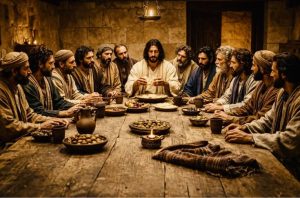
Another vital issue in discussing the crucifixion timeline is the timing of the Last Supper. At first, the Synoptic Gospels and John seem to describe the events differently. Yet, when carefully examined, these accounts can be seen as complementary rather than contradictory.
Matthew, Mark, and Luke present the Last Supper as a Passover meal. Matthew 26:17 refers to “the first day of the Feast of Unleavened Bread,” when the Passover lamb was prepared. Mark 14:12 similarly notes the Passover preparation. Luke 22:15 records Jesus saying, “With fervent desire I have desired to eat this Passover with you before I suffer.”
These passages indicate that the meal Jesus shared with His disciples was closely associated with the Passover observance. He deliberately gathered them in a context that reflects the Passover setting. This supports the view that the Last Supper served as a Passover meal.
John’s Gospel presents a different chronology. John 18:28 notes that the Jewish leaders avoided entering Pilate’s headquarters “lest they should be defiled, but that they might eat the Passover.” John 19:14 describes the day of Jesus’ trial as “the Preparation Day of the Passover.”
At face value, these statements suggest that the Passover meal had not yet been eaten at the time of Jesus’ trial and crucifixion. This creates an apparent difference in timing between John’s account and the Synoptic narratives. But rather than viewing these differences as contradictions, several plausible harmonization have been proposed:
1. Calendar Variation: Galilean vs Judean Practice
Jesus and His disciples, being from Galilee, may have followed a slightly different calendar reckoning than the Judean authorities. This could allow Jesus to celebrate Passover earlier than the official Temple schedule in Jerusalem
2. Broader Use of “Passover” Terminology
The term “Passover” can refer not only to the meal itself but also to the entire festival period (Unleavened Bread). John may be using the term in this broader sense, while the Synoptics focus on the meal itself.
3. Theological Emphasis in John
John consistently presents Jesus as the fulfillment of the Passover lamb typology. The timing of the crucifixion aligns symbolically with the slaughter of Passover lambs in the Temple. This theological framing highlights Jesus as the ultimate Passover sacrifice, fulfilling the typology established in the Old Testament (see Exodus 12).
Historical and Astronomical Evidence
A key point in resolving the question “Was Jesus Crucified on Wednesday or Friday? is the historical and astronomical evidence. Beyond the biblical witnesses, scholars also examine historical records and astronomical calculations to identify the most likely year of the crucifixion.
Two primary nominations emerged: AD 30 and 33. The selection of these dates is not arbitrary. They are favored because they:
1. Both align with the general timeframe of Jesus’ public ministry under Tiberius Caesar.
2. Both fall within the tenure of Pontius Pilate (AD 26–36).
3. Correspond with Passover dates that can reasonably match Gospel chronology.
Other proposed years either fall outside Pilate’s tenure or do not align as well with the Passover calendar.
Passover is determined by the lunar calendar, specifically the 14th day of the Jewish month of Nisan, starting at sunset. Astronomical reconstructions indicate that in AD 30, Nisan 14 likely fell on a Friday (April 7). Similarly, in AD 33, Nisan 14 likely fell on a Friday (April 3). In both cases:
- The crucifixion aligned with Preparation Day—Friday.
- The Sabbath that followed was the regular, weekly Sabbath (Saturday).
- This Sabbath might have coincided with Passover Sabbath, warranting the “high Sabbath” description.
Remarkably, neither reconstruction favors a Wednesday crucifixion.
While both AD 30 and AD 33 are viable, many scholars consider AD 33 the stronger option due to several converging factors:
1. Duration of Jesus’ Ministry
John’s Gospel records at least three Passovers during Jesus’ ministry (John 2:13, 6:4, 11:55), suggesting a ministry spanning approximately 3 years. AD 33 allows a fuller ministry timeline, beginning around AD 30.
2. Astronomical Considerations
AD 33 is associated with a lunar eclipse on April 3, which some connect, though not definitively, with biblical reference to darkness at Jesus’ crucifixion (Mark 15:33–41). Though inconclusive, yet this correlation adds an interesting historical data point.
3. Chronological Fit
AD 33 provides a smoother alignment between the beginning of Jesus’ ministry, the number of Passovers recorded in John, and the timing of events leading up to the crucifixion
Conclusion
While discussing the question “Was Jesus Crucified on Wednesday or Friday?” can be intellectually engaging, the Gospels’ message is not hinged on getting the chronology with absolute precision. The New Testament’s focus is the theological significance of the event itself. Across all four Gospels, the unified testimony is clear and consistent:
- Christ was truly crucified.
- He was buried.
- He resurrected on the third day, according to His own words.
This threefold proclamation is the foundation of the Christian faith, echoed in apostolic teaching (1 Corinthians 15:3–4). The significance of the crucifixion is ultimately not about when it happened, but what was accomplished through it:
- The atonement for sin.
- The fulfillment of Old Testament typology, including the Passover imagery in Exodus 12.
- The validation of Jesus’ identity as the Messiah.
- The victory over sin and death confirmed by the resurrection.
Whether one holds to a Friday or Wednesday chronology, Christianity’s central confession remains unchanged: Christ died for sins and was raised to life.
Importantly, the diversity of interpretations on chronological details does not undermine the Bible’s integrity. Rather, it reflects:
- The richness of the biblical text.
- The use of different literary perspectives by the Gospel writers.
- The need for careful interpretation within historical and cultural context.
The Gospels, taken together, present a coherent and reliable witness to Christ’s life, death, and resurrection. The essential truths are stated clearly, consistently, and with theological purpose.
Ultimately, the crucifixion calls for faith, not in a reconstructed timeline, but in the person and work of Christ. The New Testament emphasis is on the finished work of Christ that secures salvation for all who believe, not on settling every chronological debate. The question “Was Jesus Crucified on Wednesday or Friday?” may invite study and discussion, but it should never overshadow the greater certainty: Christ has died, is risen, and is alive forevermore.