Introduction
Scripture, at its core, is the progressive revelation of God’s redemptive plan through covenant-based relationships with humans. Throughout Scripture, God is seen initiating covenants with humans. The holy and infinite God related to fallen and finite humans, not arbitrarily, but deliberately through the structure of covenant.
Therefore, understanding God’s covenant relationships with humans is crucial to understanding God’s redemptive plan. Covenant is the framework within which God’s revelation in the Bible unfolded. God’s character, laws, and redemption plan was unveiled through covenant relationships with different humans.
There were many divinely initiated covenants recorded in Scripture, but the two covenants—the Old and the New Covenant—are the most critical in redemptive history. They capture the complete picture of redemption.
The two Covenants, though critical to Christian faith, yet are often misunderstood. Many Christians don’t understand how the Old and the New Covenants relate. They ask:
- Does the Old Testament still apply to us today?
- Why a New Covenant if the Old Covenant was from God?
These questions reveal a profound ignorance of redemptive history. A study of the two Covenants, therefore, is crucial. Without clarity here, believers are vulnerable to serious doctrinal errors.
Therefore, this article will carefully and systematically examine the two Covenants. The aim is not merely academic knowledge, but theological clarity that produces a lifestyle of confidence, obedience, and gratitude for God’s redemptive grace in believers.
Related Article: The Law Of God In Redemptive History
The Purposes Of Covenant

To begin with, we must understand why an infinite and sovereign God initiated covenants with finite humans at all. He is not obligated to bind Himself to anyone. Yet, He initiated covenants with humans. Covenant is exclusively a divine initiative. But why did God initiated covenants with humans?
God’s Chosen Framework for Relationship
God doesn’t merely rule from a distance. He relates. And, covenant is the structured, relational framework God uses to engage with humans. Through covenant, God defines who He is, who the human party is, and how the relationship would function.
An Expression of Divine Condescension
In covenant, the infinite God condescends to bind Himself to finite humans. He commits His promises, His name, and His character to the fulfillment of His covenant (Psalm 89:19–34).
God’s covenants are acts of divine grace. Though it includes obligations, yet covenant is first grounded in God’s grace, not human merit. The security of a covenant rests in who God is, not in what man does.
The Means of Revelation
Covenant is not merely about blessings or rules; it is about divine disclosure. Covenant is the framework by which God revealed His character, will, and redemptive purposes. Without covenant, we would have no clear framework for understanding God. Covenant makes God knowable and intelligible (Psalm 25:14).
The Basis for Human Responsibility
God’s covenant spells out God’s promises, but also defines human responsibilities. It defines how God’s people are to live in response to His grace (Exodus 19:5). Biblical obedience is always covenantal obedience, not self-generated righteousness.
Revelation of God’s Faithfulness
God’s covenant displays God’s faithfulness. Humans break covenants; God does not. The constancy of God’s covenant marks the contrast between divine faithfulness and human unfaithfulness (Lamentations 3:22–23).
The transition from the Old Covenant to the New Covenant testifies not to God’s failure, but to His unwavering commitment to redeem a people for Himself.
The Vehicle of Redemption
Ultimately, covenant is God’s chosen vehicle for redemption. All of God’s major redemptive act in Scripture unfolded within covenant framework. For example, Israel’s deliverance from Egypt. Covenant reveals the gospel throughout history until its fulfillment in Christ.
Understanding Covenant
Again, to understand the two Covenants, we must understand what Scripture means by “covenant.” Modern Bible readers often reduce covenant to a contract or agreement, but the biblical concept is far richer, deeper, and more solemn.
The Hebrew Concept of Covenant
The primary Hebrew word translated covenant is berith. It carries the idea of a binding, solemn commitment established by oath and often ratified by sacrifice.
Berith implies cutting a covenant. It reflects ancient practice in which animals were cut in halves, indicating the seriousness of the commitment. The message was unmistakable: May what happened to these animals happen to the one who breaks this covenant. God used this concept in Genesis 15, when establishing His covenant with Abram.
Throughout the Old Testament, berith carries several consistent features:
It is initiated by God.
It is binding and irreversible unless God Himself dissolves it.
It often involves blood, symbolizing life and death commitment.
It establishes a relationship governed by defined terms.
Therefore, covenant is never casual. It is solemn, sacred, and life- binding.
Unlike modern contracts, which is negotiated between equal parties and terminates when conditions are unmet, covenant is hierarchical —initiated by a higher party, and is enduring. In biblical covenants, God is the initiator, while humans are the recipients (Deuteronomy 7:9). Covenant is not transactional; it is relationally binding and rooted in God’s faithfulness.
The Greek Concept of Covenant
The primary Greek word translated to “covenant” in the New Testament is diathēkē. This choice is significant. The New Testament used diathēkē, instead of synthekē, which denotes contract or mutual agreement. But diathēkē describes an arrangement initiated by a higher party, not negotiated by equals. It highlights the divine initiative in covenant.
Also, diathēkē describes a testament or will put into effect by the initiator’s death. The book of Hebrews draws explicitly on this testamentary nuance of diathēkē.
Hebrews 9:16:
“For where there is a testament, there must also of necessity be the death of the testator.”
Here diathēkē is presented as a testament put into effect by the initiator’s death. The New Covenant is inaugurated through Christ’s shed blood. This is why Jesus speaks of His blood as covenantal blood (Matthew 26:28). Without blood, covenant cannot become effective (Hebrews 9:22).
The Elements of a Covenant
Biblical covenant has three essential elements: promise, obligation, and token. Understanding these elements helps us appreciate how divine grace and human responsibility relate.
Promise
Covenant starts with promise. Covenant is never first about human performance, but divine commitment. God declares what He will do and what He will give. The promises flow from God’s grace not human worthiness. We see God’s promises to:
Abram (Genesis 12:2–3).
Noah (Genesis 9:11).
Israel (Exodus 19:5–6).
David (2 Samuel 7:12–16).
And, ultimately the New Covenant (Jeremiah 31:33–34).
Covenant promise is God’s part, and is anchored in His character. This is why covenant provides assurance. God cannot break His word (Numbers 23:19).
Obligation
Covenant contains obligation. Covenant doesn’t remove human responsibility. God’s covenants always call for a response of faith, obedience, and loyalty(Exodus 19:5).
Obligation doesn’t negate grace; it flows from it. God first calls people into His relationship, then asks for obedience. Obedience is the fruit of relationship, not the entry way. Even in the Abrahamic covenant, which foreshadowed justification by faith, Abraham was asked to walk faithfully (Genesis 17:1).
Token
Token is a visible marker that attests to the covenant. It signifies the covenant’s binding nature. God Himself appoints the signs. For example, in the Abrahamic covenant, the token was circumcision (Genesis 17:10–11). Token marked covenant identity and reminded God’s people of their covenant relationship.
The Historical Progression of God’s Covenants
Biblical covenant was progressive. Each built on the previous and advanced God’s redemptive plan. They differ in scope, but they all share a dominant purpose: redemption. This progression is vital for rightly distinguishing the Old Covenant from the New Covenant.
The Noahic Covenant:
After the flood, God made a covenant with Noah, and all creation (Genesis 9:11). It is universal, unconditional, and preservative—it guarantees that life will continue, making redemption possible. Without it, no later covenant, and no gospel, could unfold. Its token is the rainbow (Genesis 9:12–17).
The Abrahamic Covenant
This covenant marks a major turning point in redemptive history. God chose Abraham, and promised to bless all humanity through one of his seeds (Genesis 12:2–3).
This covenant is crucial to redemption because it introduces righteousness through faith, not through the law. Concerning Abraham, Genesis 15:6 says:
“And he believed in the LORD, and He accounted it to him for righteousness.”
Paul later cited this verse, saying that the gospel was preached beforehand to Abraham (Galatians 3:8). Therefore, righteousness by faith is established within covenant.
The Mosaic Covenant
This covenant, often called the Old Covenant, was inaugurated at Sinai between God and Israel (Exodus 19:5–6). It is exclusively national—God was dealing with Israel, not all humanity; conditional —with blessings and curses, and governed by the Law.
This covenant does not nullify the Abrahamic promise (Galatians 3:17). It is temporary, and serves a pedagogical role—revealing sin, restraining evil, and pointing forward to Christ.
The Davidic Covenant
God later made a covenant with David, with the promise of an eternal throne (2 Samuel 7:12–13). This covenant introduces the expectation of a coming Messianic King—a Son of David whose reign will never end. This covenant narrows the redemptive focus further: redemption will come through a king, not merely a nation.
The Two Covenants: The Mosaic/Old Covenant

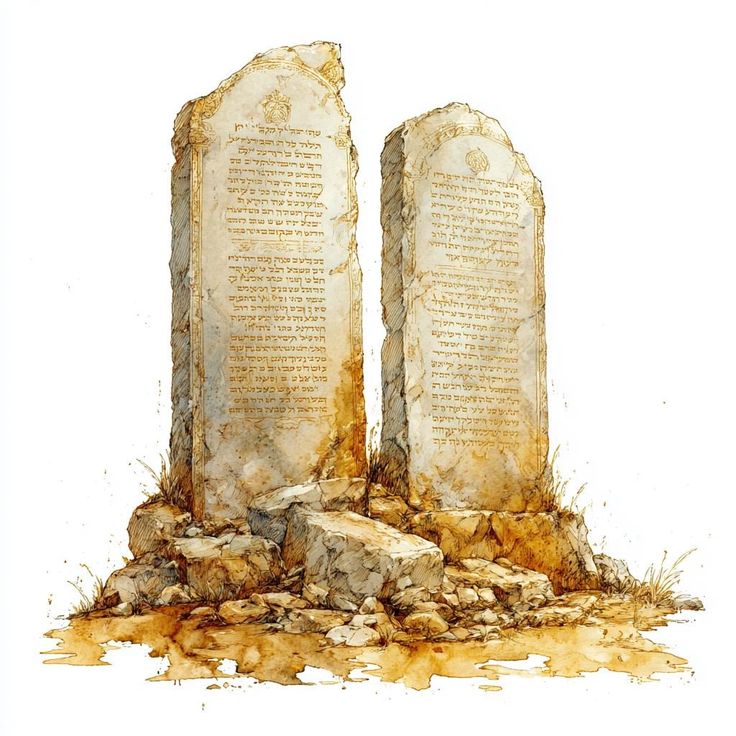
The Old Covenant is God’s covenantal agreement with Israel, which governed their relationship. It was inaugurated through Moses at Sinai (Exodus 24:7–8). The Old Covenant started at Sinai, not with Adam and or Abraham (Deuteronomy 5:2–3).
The Old Covenant operated through three mechanisms. First is the law. The Mosaic Law occupies a central place in the Old Covenant. It reveals God’s requirements and the punishments for disobedience.
Many think of the Law as evil, but it is not (Romans 7:12). The problem is not the Law itself, but human incapability to keep it (Romans 8:3). The Law reveals God’s requirements, but it does not impart ability to obey.
Second is a system of sacrifice. God instituted a chain of sacrifices to atone for the sins of His people, in order to keep them in His covenant. The sacrifices also served as means to offer worship and gratitude to God. The Tabernacle is the point of fellowship between God and His people, through the mediation of the priesthood.
Distinguishing the Old Covenant and the Old Testament
While the Old Covenant and the Old Testament are related, they are not identical. The Old Covenant is the covenantal agreement which guided Israel’s relationship with God. The Old Testament refers to a collection of inspired books—Genesis to Malachi.
The Old Testament is the record of God’s relationship with Israel under the Old Covenant. However, not all Old Testament books are covenant documents. The Psalm, Proverbs, and Ecclesiastes are worship and wisdom books, not covenant legislation.
The Old Covenant is obsolete because of the New Covenant inaugurated by the blood of Jesus, but the Old Testament as inspired and authoritative Scripture is still in effect today.
The Purpose of the Old Covenant
The Old Covenant served several critical purposes:
1. To preserve Israel as a peculiar people for God.
2. To provide a temporary means of fellowship with God, until the coming of the promised Messiah.
3. To reveal sin and human’s sinfulness (Romans 3:20).
4. To prepare the way for Christ.
5. To function as a tutor leading to Christ (Galatians 3:24). The Old Covenant was never intended as God’s final provision for salvation. It was provisional and anticipatory.
The Insufficiency of the Old Covenant
The Old Covenant was divinely initiated, but it was insufficient to bring ultimate redemption. This is not a failure of God’s design; it is the design. Understanding this is vital for understanding the necessity of the New Covenant.
Firstly, the Law could never make righteous. It revealed God’s requirements. But because of inherent sinfulness, fallen humans could never keep the Law (Romans 7:19-20). Therefore, they are condemned by the Law.
The Law was provisional, not final. Its insufficiency was not a flaw in God’s design but part of God’s redemptive plan. It served a teaching purpose—teaching sin, revealing human weakness, and pointing forward to the coming Savior. But it was not designed to make righteous (Galatians 3:24).
Secondly, the sacrifices could never provide perfect cleansing of sinners (Hebrews 10:1–4). Their daily and annual repetitions underscored the Old Covenant’s insufficiency to provide full redemption. The sacrifices were provisional. They pointed forward to the coming of the perfect sacrifice through the atonement of Christ.
The Promise of a New Covenant
While the Old Covenant was yet in force, God had begun to speak of another covenant which would address the insufficiencies of the Old Covenant. The nature of the New Covenant was plainly foretold in Jeremiah 31:31–34 and Ezekiel 36:26–27:
- Internalized law.
- Personal, intimate relationship with God.
- Complete forgiveness.
- A renewed heart.
- Indwelling of God’s Spirit.
The Two Covenants: The New Covenant

The New Covenant is the final covenantal arrangement by which God is now relating to all humanity. All previous covenants were preparatory. But the New Covenant is final, perfect, and universal, inaugurated by Christ.
Firstly, unlike the Old Covenant which was Jewish, the New Covenant is for all humanity. Faith, not ethnicity, is the basis for inclusion in it (Ephesians 2:13–16).
Secondly, the New Covenant is based exclusively upon Christ. It was inaugurated and ratified by His shed blood (Luke 22:20; Hebrews 8:6; Hebrews 9:16–17).
Thirdly, unlike the Old Covenant which relied on external force of the Law, the New Covenant works inwardly through God’s indwelling Spirit, who produces obedience within believers (Philippians 2:13). God’s law has become internalized and operational in believers through the indwelling Spirit (2 Corinthians 3:4–6; Hebrews 8:7–12).
Importantly, the New Covenant achieves what the Old Covenant could only foreshadow: complete forgiveness (Hebrews 10:10), guilt removal (Hebrews 10:14), and reconciliation and access to God (Romans 5:1–2; Hebrews 8:12). This is a sharp contrast with the Old Covenant, where sins were merely covered.
Finally, the New Testament portrays the New Covenant as a more superior covenant than the Old Covenant. It is built upon:
- Better promises (Hebrews 8:6).
- Christ’s eternal priesthood (Hebrews 7:24–25).
- Once-for-all sacrifice (Hebrews 10:10–14).
- Internal law and Spirit-led obedience (Hebrews 8:10).
All prior covenants pointed forward to these realities. Therefore, the New Covenant is the climax of God’s redemptive plan, fully realized in Christ, and applied by the Spirit.
The New Covenant: Promise, Obligation, And Token

Like any covenant, the New Covenant also contains three elements—promises, obligations, and token.
The Promise
The New Covenant contains promises, but its promises surpass all previous covenants (Hebrews 8:6). These promises are primarily spiritual. They include:
- Perfect Forgiveness and Cleansing (1 Corinthians 6:11; Colossians 1:14).
- A renewed heart (1 Corinthians 5:17).
- Internalized law (2 Corinthians 3:2–3).
- Personal and intimate knowledge and relationship with God (Jeremiah 31:34).
- Indwelling and inward energizing of the Spirit (Galatians 4:6)
All these blessings are automatically given at the very moment of conversion. Believers do not strive to earn them; we have received them by faith.
The Obligation
The New Covenant, though grounded in grace, yet doesn’t abolish obligation. Rather, it redefines it, from legalistic compliance to a Spirit-empowered obedience flowing from a transformed heart.
The New Covenant believer is not lawless. We have the law of Christ (Galatians 6:2)—which is the law of love (Matthew 22:37–40), the fulfillment of all the laws (Romans 13:10). The New Covenant centers on walking in the Spirit (Romans 8:4; Galatians 5:16). The obligation is no longer trying to obey in the flesh, but yielding to the Spirit who enables obedience.
New Covenant obligation is “obedience to the faith,” (Romans 1:5). This is obedience that flows from faith, not fear, motivated by love, not threat, and sustained by grace, not effort.
Under the New Covenant, believers obey not to be accepted, but because we are already accepted in Christ.
The Token
The New Covenant token is circumcision of the heart. God had always intended something deeper than flesh circumcision (Deuteronomy 30:6; Ezekiel 36:26). This is now being fulfilled in the New Covenant (Colossians 2:11).
Spiritual circumcision refers to the spiritual surgical procedure that God performs on men’s hearts, by which He produces completely new creations. This spiritual procedure removes the dominion of sin (Romans 6:6), creates a new spiritual identity, makes us sensitive and responsive to God
The circumcision of the heart is the inward mark that one belongs to the New Covenant community.
Living In The Light of the Two Covenants
The Old Covenant and the New Covenant are not rival systems, but progressive stages in God’s redemptive plan. To live correctly as believers, we must neither return to the shadow of the Old Covenant nor abuse the liberty of the New Covenant. Instead, we are to live with clarity and gratitude.
Living in the light of the two covenants means embracing what the Old Covenant prepared us for and what the New Covenant has now accomplished. The Old Covenant still holds revelatory value, but not regulatory authority over us. We are to learn from the Old Covenant, but not seek to be justified through it.
Therefore, to live in the light of the two covenants is, firstly, to intentionally dwell in what Christ has secured. We must rest in the accomplished redemption. Not striving to become what we have already become through grace.
Secondly, walking in Spirit-empowered obedience. The New Covenant calls to a higher form of obedience—one empowered by the Spirit (Galatians 5:16). Daily Christian living is a matter of yielding to the inward working of the Spirit (Philippians 2:13), not striving through the flesh.
Thirdly, avoiding the twin errors of legalism and lawlessness. Legalism is measuring standing before God through performance. Lawlessness is taking grace as an excuse to sin (Romans 6:1–2). New Covenant freedom is freedom from sin’s power, not freedom to indulge it.
Lastly, living with New Covenant consciousness. This means to keep the finished work of Christ always before our eyes. We are to relate to God with confidence, relying not on our performance, but solely on what Christ did for us (Hebrews 4:16).
Conclusion
The Two Covenants are not merely theological abstractions—they are the framework of God’s redemptive story. The Old Covenant reveals God’s righteousness and humanity’s need for grace. The New Covenant accomplishes redemption, forgiveness, and internal transformation through Christ and the Spirit.
As believers, understanding these covenants deepens our faith, obedience, hope, and worship, reminding us that God is a faithful covenant-keeping God. Through the study of the two covenants, Christians gain both clarity in Scripture and confidence in God’s promises, living as a people called, redeemed, and empowered by God’s eternal covenant love.