

Introduction
The word ministry often conjures up the image of elite Christians preaching or pastoring churches. But that image misrepresents the New Testament vision of the Christian ministry. Christ distributed different gifts to His people in order that all of us can make contributions to the advancement of His work. One such vital ministry identified in the New Testament is helps.
The apostle Paul says:
“And God has appointed these in the church: first apostles, second prophets, third teachers, after that miracles, then gifts of healings, helps, administrations, varieties of tongues.” (1 Corinthians 12:28).
The placement of helps within this list is significant. Paul presents helps not as a human invention, but as a divine appointment. This means that the helps ministry is not merely volunteering, nor is it a lesser form of ministry. Helps describes believers doing services to provide supports necessary for God’s work to advance. God’s work has always required a support system for the frontline ministers to function effectively.
This is especially true of the local church. No pastor, regardless of gifts or physical strength, can take on God’s work all by Himself. Nor did God design His church around such a model. God’s work is meant to be a shared work. Christ’s vision of the local church is that all believers participate in God’s work.
Life within a church requires multiple forms of service, such as discipling new converts, visiting sick members, managing facilities, leading service teams, and providing financial resources. Those who undertake these services may never stand on a stage. Yet they are as crucial to the church as those who stand on the stage.
This article explores the necessity of this highly important ministry—the helps ministry, to call those who serve behind the scenes to recognize that their labor matters, while challenging those serving in frontline ministries to recognize that they cannot fulfill their calling alone.
What Is the Helps Ministry?

Paul, in 1 Corinthians 12:28, says that God appointed “helps” alongside other graces in the church. He does not say that the apostles invented different support roles because they became too busy. This places helps within God’s wisdom for the functioning of His church.
In 1 Corinthians 12, Paul argues that the church is one body with many members, whom God has arranged to function together according to His purpose, not a gathering of individuals competing for glory. This truth carries some implications.
First, the helps ministry must never be seen as mere volunteerism. People may volunteer without understanding that what they do are actually Christian ministry expressions. The helps ministry serves as a support system for the work God is doing through His church.
Second, believers should never measure the value of their service by its visibility. A ministry is not important because it is visible but because it is appointed by God and ultimately contributes faithfully to the purposes of Christ. Third, helps is not a ministry reserved for people who are less spiritual. It is believers serving within the body with their abilities.
Antilēmpsis
The Greek word translated “helps” in 1 Corinthians 12:28 is antilēmpsis. It occurs only here in the New Testament and carries the idea of aid or assistance given to another; to come alongside and provide support for another person. The helps minister does not replace the one being helped. Rather, he or she contributes what is needed so that the task can be fulfilled effectively.
This principle is seen throughout Scripture. Aaron and Hur supported Moses’ arms during a battle (Exodus 17:8–13). The apostles needed other believers to take over the daily distribution so that they could focus on prayer and the Word (Acts 6:1–4). Paul himself repeatedly acknowledged believers who labored alongside him in different ways. Therefore, helps is basically ministry through assistance.
One reason the helps ministry is not so esteemed is the wrong perception of the word help. A helper is often seen as someone who occupies a subordinate or insignificant position. But Scripture does not present helping in this way.
In Genesis 2:18, God calls the wife a helper for the husband. The Hebrew word translated helper is ʿēzer. The same term is used for God as the Helper of His people (Psalm 33:20; Psalm 70:5), yet God is not lesser to we who He helps. Therefore, the biblical concept of helps is concerned with function, not worth.
This clarification matters to understanding ministry. A helps minister is not lesser than the pastor who preaches. His or her contribution, while it may not be visible, is essential to the effectiveness of the church (1 Corinthians 12:22).
The church needs to recover a biblical view of significance. Every ministry is not equally visible, but every God-appointed ministry has a legitimate purpose. The helps ministry shows this perfectly. It allows believers to participate in God’s work and strengthening the church, by taking responsibility and serving others.
Why the Helps Ministry?
The helps ministry is critical in God’s design for His church. It reflects a fundamental principle of New Testament church life: God intends all His people to serve together.
No individual believer can fulfill the church’s mission alone. Like the human body, the local church is intended to operate through the coordinated function of its many members (1 Corinthians 12:14–21). One member’s function does not make another’s unnecessary. The local church is not built around one person. Christ distributed different graces and functions among His people so that the body can function effectively.
A pastor can preach and lead, but other believers can lead teams, welcome visitors, disciple converts, provide financial support, and perform countless other acts of service. These support roles do not undermine the pastor’s role. Rather, they help create the conditions in which the church effectively operates. God’s vision of the helps ministry is not that the pastor does the ministry while everyone else helps him, but that the whole body ministers as each member has received grace.
Ephesians 4:11–12 reinforces this principle. Christ gives the church leadership —apostles, prophets, evangelists, pastors, and teachers—not so that they can personally perform every ministry function, but to equip the saints to do ministry. A pastor who personally tries to handle every task will eventually wear out, while the vast human resources in the church remains untapped.
A healthy local church involves equipping and entrusting. A pastor has oversight, but that does not mean he must personally carry every responsibility. Other believers should be equipped and entrusted with fitting responsibilities. This is part of responsible pastoral leadership, not an abdication of pastoral responsibility.
Every Believer Has Something to Contribute
The New Testament vision is not that believers merely consume ministries. Every believer has received a gift (1 Peter 4:10). This means that everyone has something to contribute. The governing question therefore becomes, “What has God placed in me that can benefit His people?” Deploying our individual graces will result in increase of the quality of experience within the church.
The helps ministry describes believers’ willing participation in the work within the local church. A healthy church is one in which believers understand that they too have a duty to serve. This way, the burden of ministry is shared, and the church is better positioned to fulfill its calling. The larger New Testament reality is that Christ builds His body through the ministry of all its members.
The Biblical Pattern of the Helps Ministry

The Old Testament
The Old Testament provides the foundational blueprint for the helps ministry. And, nowhere is this more clearly seen than in the Levitical order. When God established the tabernacle worship, He set apart the tribe of Levi for the work. Out of Levi, God chose and gave Aaron and his sons oversight of the work as priests. Then, God assigned the remaining Levites to support the priesthood in the tabernacle (Numbers 3:5–8).
The Levites did not perform exactly the same functions as the priests. Nevertheless, their service was critical to the work. Their tasks included tasks that would not ordinarily be considered glamorous. Yet the efficiency of the worship system depended upon their faithful service.
During Israel’s wilderness journey, the tabernacle had to be dismantled, transported, and reassembled. This was the Levites’ job (Numbers 4). The Kohathites carried designated holy furnishings. The Gershonites handled the curtains and related materials. The Merarites handled structural components such as boards, pillars, sockets, and bars.
Later, when Israel had settled in Canaan, the Levites’ services continued in the temple. They included making music, gatekeeping, preparation, and treasuries (1 Chronicles 23–26). Much of their works happened away from the central priestly area. Yet without them, the priests could not function efficiently. This provides a vital principle for understanding ministry: different functions do not necessarily indicate different value.
While we are under a better covenant inaugurated through the finished work of Christ, the Levitical order provides a valuable lesson that remains evident in the New Testament: God’s work requires many people faithfully performing services that support the works of the frontline ministers.
The church life involves much more than what the pastor does. There are families to care for, facilities to maintain, visitors to welcome, children to nurture, and gospel work to finance. These aspects of the work are intended to be shared by the congregation through the helps ministry.
The New Testament
Acts 6 provides the New Testament’s model of the helps ministry in the church. The apostles in Jerusalem were confronted with a threatening situation. Complaints regarding the daily distributions had arisen, threatening to break the young church. But the apostles’ response reveals a vital wisdom for church ministry.
Recognizing their limitations to personally take responsibility for every need of the congregation, they gathered the disciples and explained that it was not good for them to leave the ministry of the Word to serve tables (Acts 6:2). This does not imply that serving tables was beneath them. The issue was about priority. The primary ministry to which Christ had called them is prayer and the Word.
Therefore, they instructed the disciples to choose men who possess good reputation, spiritual maturity, and wisdom, who could be set over the task. This shows that serving tables is not spiritually insignificant. It requires that the people entrusted with it should possess solid spiritual qualifications.
This shared ministry produced an efficient system. The widows received adequate attention. The apostles remained devoted to prayer and the Word. It led to the Word of God spreading and more souls being won (Acts 6:7).
This shows that the helps ministry is not simply to make leaders comfortable, but to enable the various responsibilities of the church to be carried by the people God has equipped for them, so that nothing suffers.
Acts 6 also challenges the assumption that helps ministry is less spiritual than preaching. Scripture does not portray the men as insignificant because they served tables. Philip, one of the seven, became prominent in the gospel work at Samaria. He also got the Ethiopian official saved (Acts 8:5–40). This means that serving in a helps capacity does not affect what God can do through believers.
However, this should not turn into a form of status-seeking. The lesson is not that practical service becomes valuable only when it eventually leads to a more visible ministry.
A Supernatural Ministry

One of the New Testament’s most astounding revelations about the helps ministry is its supernaturalness. Helps is neither unspiritual nor less spiritual than the ministries of apostles, prophets, or pastors. Paul lists helps alongside these ministries as God’s appointment in the church (1 Corinthians 12:28).
Helps is a ministry that originates from God, and is backed up by His power like the frontline ministries. It is not only people who preach, teach, or prophesy, who are anointed. The discussion in 1 Corinthians 12 begins with spiritual manifestations. Paul emphasizes that there are different gifts, different ministries, and different activities, but the same God is at work in them.
In Acts 6, when the apostles charged the disciples to choose men to whom the responsibility of the daily distributions could be entrusted, they required that the men should be “full of the Holy Spirit” (Acts 6:3). This means that believers who serve in helps capacity possess the anointing in the same way as frontline leaders, and can also perform great spiritual exploits even while “serving tables”.
The helps minister can receive word of knowledge about those they serve, or discern the state of those they serve by the Spirit, or cast out demons from those they serve. The pastor does not have to go attend to every issue in every sector of the local church. The helps ministers should be helped to understand the supernaturalness of their service.
Acts 8:4–8 records Philip, one of the seven, doing great spiritual exploits in Samaria, preaching Christ and getting people saved, healed from sicknesses, and delivered from demonic oppression. A critical part of serving God’s people is being able to minister to them supernaturally when necessary.
The Helps Ministry and Spiritual Leadership
The ministry of the New Covenant is a partnership of the members with the spiritual leaders. The leaders cannot and should not carry every local church responsibility by themselves. They are to perform the duties that belong solely to their calling, while believers come alongside them to perform the tasks they could.
Paul’s letters portray this partnership. He names individuals who worked with him and supported him in the gospel work (Romans 16:1–16; Philippians 4:2–3; Colossians 4:7–14). His remarkable graces did not replace his need for others.
Spiritual leaders are not called to personally carry every responsibility in the church. They are to equip believers so that they can do their share of the work (Ephesians 4:11–12). This requires leaders to recognize the graces of the people. Leadership obligations includes recognizing and developing the graces of others, and entrusting them with appropriate tasks. This is not a loss of control, but multiplication of ministry.
On their part, the members should not place an unhealthy weight on the leaders by expecting them to carry every responsibility. Such expectation is inconsistent with the New Testament vision of the ministry as a shared responsibility. The local church should cultivate believers who are capable of taking responsibility for their spiritual household.
This shared responsibility produces a couple of benefits. First, it protects leaders from unnecessary burdens. When believers faithfully carry responsibilities they are equipped to carry, pastors have increased chance to remain devoted to the Word, prayer, leadership, and other responsibilities that fall within their particular calling. This is not about making leaders lazy—spiritual leadership is work; it is about ensuring that the right people carry the right responsibilities.
Ultimately, a shared ministry results in the healthiness and growth of the church. The church ministries become more effective, people receive proper care, new believers become established, and gospel projects progress, because capable believers assume responsibility. Ultimately, the benefits extends beyond the pastor.
The helps ministry should be understood as partnership in the mission of Christ. Spiritual leaders should not have to carry weights that other believers can faithfully carry. A healthy church life is a shared life. The entire ministry of the local church does not revolve around the pastor. The congregation is not merely an audience. Every member has a place in the mission of Christ, the Head of the church.
Your Service Matter in the Body
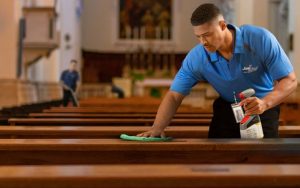
The helps ministry ultimately presents a crucial truth: you matter in the body of Christ. You do not need a title or a microphone to matter. Your value within the body is not dependent upon how many people see what you do. God has placed you in His church according to His purpose, and you have a contribution to make. 1 Corinthians 12:22 makes clear that the members who seem less prominent are also important.
Some services may never be noticed beyond those directly served, yet God values them. This should change our perception of ministry. Your ability, such as encouraging people, organizing things with ease, or operating technical equipment, may seem ordinary, yet the church cannot be efficient without it.
Therefore, do not despise your service. It may never make it into the live stream videos, but it may be part of the reason a person is rooted in church, a need is met, or a ministry progresses.
The question is not whether you have something to contribute but whether you are willing to recognize what God has placed in your hands and faithfully use it for the good of His body. Your service matters. Embracing your responsibility strengthens the body.
Conclusion
The helps ministry highlights this truth: God’s work is never intended to rest on a few people’s shoulders. Christ has placed us in His body and given us different graces, so that we can advance His mission.
From the Levites assisting the priests to the believers serving tables needs in the church, Scripture repeatedly demonstrates how God intends His work to be done: every member participating and making contributions.
A helps ministry may not be glamorous, yet its impact can be profound. Singing in the choir, bringing order to worship as an usher, or giving money to the gospel is participating in ministry of eternal significance.
We should not wait for a title before serving. Nor should we measure the value of our ministry by visibility. There is no small ministry when it is offered with a right heart. The church needs believers who give, organize, welcome, visit, clean, administer, and support, as much as it needs preachers. These functions differ, but they serve the same Lord and purposes. Thus, do not underestimate what God can accomplish through your participation.