

Redemption in the Light of God’s Saving Work
Redemption is one of the biblical themes that explains what God accomplished for humanity through Jesus Christ. Scripture never portrays salvation merely as a reform of humanity. It portrays salvation as a divine act of deliverance or rescue.
The language of redemption communicates the idea of release through the payment of a price. This is especially significant in the New Testament, where several Greek words associated with buying, ransoming, and releasing are used to describe Christ’s saving work. Jesus Himself declared that He came “to give His life a ransom for many” (Mark 10:45).
Redemption, therefore, tells us what Christ has done to secure our freedom. Yet, biblical redemption is more than simply being rescued from something. The New Testament’s language of redemption is so rich. It implies being also rescued unto something. Understanding redemption thus helps us not only to understand the cost of our freedom but also the purposes of our freedom.
To grasp the richness of biblical redemption, then, we must understand the biblical terminologies of redemption, why humanity needed it, the price that Christ paid to accomplish it, what we have been redeemed from and for, and how this redemption should shape our everyday lives.
What Does Redemption Mean in the Bible?

The concept of biblical redemption is only meaningful through the Bible’s use of the language of bondage to describe fallen humanity’s condition. Redemption assumes that a person is in captivity and that a decisive action of liberation is required.
Redemption is Deliverance from Bondage
Redemption is securing the release of a captive. This is clear from the description of God’s action of delivering Israel from Egypt in redemption language:
“I will redeem you with an outstretched arm.” (Exodus 6:6)
Scripture describes humanity’s condition under sin as bondage. Sin is not merely wrongdoing; it is a state of captivity (John 8:34). This explains why salvation cannot be reduced to mere moral reform. A person enslaved to sin needs more than reform; he needs liberation. This is the gospel’s claim: God has acted in Christ to secure humanity’s release from a bondage we could never free ourselves from.
Redemption Involves a Cost
Redemption comes at a price. The captive does not pay for their own release. Someone else bears the cost.
Scripture emphatically rules out the possibility of humanity redeeming itself (Psalm 49:7–8). Nothing of us is sufficient as a price for our release from sin’s captivity. Therefore, God had to step up to provide the payment for our release (1 Peter 1:18–19).
Biblical redemption emphasizes both the seriousness of our condition and the greatness of God’s grace. What we could never accomplish for ourselves, God, in Christ, accomplished for us.
Redemption Results in Belongingness
Redemption does not end with release. The redeemed person is brought into a relationship with his redeemer.
This is what plays out in God’s saving act. He does not redeem just so the redeemed can live for themselves. He redeems to make the redeemed His own (1 Corinthians 6:20; 2 Corinthians 5:14–16). Biblical redemption changes our status, master, and the direction of our lives. The redeemed life is not simply a life of escape.
Therefore, at its core, biblical redemption holds two powerful truths together: God redeems from bondage and brings into belonging.
The New Testament Language of Redemption
The New Testament uses a variety of Greek terms to convey God’s redeeming act. These terms do not portray different saving acts of God. Rather, they portray the richness of the one great work God accomplished through Christ.
Agorazō
The verb agorazō describes the act of buying something from the market. It is used in the New Testament to describe believers as having been bought by Christ. Paul writes about this in 1 Corinthians 6:20; 1 Corinthians 7:23.
Agorazō describes ownership resulting from purchase. The price Christ paid both secured sinners’ release and made them His possession. Believers belong to the One who bought us. Our conduct, consequently, is grounded in this reality:
“Therefore glorify God in your body and in your spirit, which are God’s” (1 Corinthians 6:20).
Exagorazō
Exagorazō literally means “to buy out”. It is used specifically in the context of redeeming someone from slavery. Paul used it when explaining believer’s deliverance from our former position under the law and the curse of the law (Galatians 3:13; Galatians 4:5).
God redeems sinners from sin’s captivity and into a new status before Him through Christ. Redemption, therefore, is never an end in itself. God redeems in order to bring the redeemed unto Himself.
Lutroō
This term conveys the idea of release through the payment of a price. This ties biblical redemption to Christ’s sacrifice. Peter says believers are redeemed “with the precious blood of Christ..” (1 Peter 1:18–19). Paul agrees with Peter, saying Christ offered Himself for us, “that He might redeem us…” (Titus 2:14).
Its noun form—apolutrōsis—carries the same idea. The price, in biblical redemption, is Christ’s own life. Ephesians 1:7 says:
“In Him we have redemption through His blood…”
Here redemption is tied to Christ’s blood. Sinners are released from sin’s guilt solely through Christ’s sacrifice.
Lutron
Lutron refers to a price paid to secure a release. Jesus used this word when presenting His death as the price for the salvation of many (Mark 10:45). Paul echoes this in 1 Timothy 2:6. The ransom language communicates the costliness, substitutionary character, and liberating purpose of Christ’s death.
The Necessity Of Redemption
The greatness of redemption cannot be appreciated until we understand the seriousness of humanity’s conditions under sin which necessitates redemption.
Spiritual Bondage
Sin is not just what people do; it is a power that rules over fallen man (Romans 7:14–17). This explains why sinners cannot refuse sin or deliver themselves from it. Humanity thus needs more than forgiveness. It needs liberation from sin’s dominion.
This does not mean sinners are incapable of making ordinary moral choices. Rather, it means that no sinner can, by himself, free himself from sin’s ruling power or restore himself to God. Freedom must come from outside us.
Guilt and Condemnation
Scripture emphasizes humanity’s guilt and condemnation before God (Romans 5:16). Sinful humanity thus needs more than a change of situation; we need deliverance from guilt and condemnation. This is why biblical redemption is closely tied to justification. Romans 3:24 speaks of sinners
“being justified freely by His grace through the redemption that is in Christ Jesus”.
To be justified is to be brought to stand before God without guilt. Scripture declares that there is no condemnation for those who have trusted in Christ’s finished work, (Romans 8:1).
Death
Sin also brought death upon humanity: spiritual death (separation from God’s life) and physical death (Romans 5:12–13). In this condition, it is impossible for humanity to rescue itself. Since the dead cannot make itself from death, our deliverance must be an act of divine grace. Redemption must go beyond a rescue from sin’s penalties; it must involve the giving of life to dead people.
Spiritual incapacitation
Scripture speaks of this condition as “when we were without strength” (Romans 5:6). Nothing of or from us—religiousness, morality, or good deeds—can remove sin’s guilt or reconcile us with God. Redemption, thus, must come from outside. We could never rescue ourselves from captivity, therefore God ransomed us Himself. The gospel is not the good news that humanity found a way back to God but that God made a way back to Him.
Christ: The Price of Our Redemption
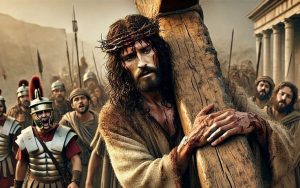
Scripture ultimately grounds biblical redemption in the person and work of Christ. Redemption is not an abstract blessing that exists independently of Christ. It is situated in Christ! Paul writes:
“Being justified freely by his grace through the redemption that is in Christ Jesus.” (Romans 3:24)
God did not redeem us by lowering His standard of righteousness or simply overlooking sins. This is important. God acted through Christ to deal with our sins and fulfill His righteous requirements.
The New Testament repeatedly links redemption to Jesus’ sacrificial death. Peter says believers were redeemed “with the precious blood of Christ, as of a lamb without blemish and without spot” (1 Peter 1:18–19). The spotless lamb language depicts Christ’s sinlessness. He died as a sacrifice, not a punishment for His sins (Revelation 5:9).
Redemption, therefore, is costly. The cost is the life of God’s precious Lamb. Jesus Himself explicitly interpreted His death in redemptive terms (Mark 10:45). His death was not an unfortunate interruption of His mission. It was His mission. It shows the costly and representative nature of redemption. The sinless One gave His life for sinners.
Redemption, thus, rests entirely on Christ’s finished work. It requires no supplementation. Christ did not initiate redemption and leave it to us to finish. His last utterance on the cross was “It is finished!” (John 19:30). He accomplished everything necessary for our redemption (Hebrews 9:12). Thus, our confidence rests not on our performance but on Christ’s sufficiency. We do not attempt to pay what Christ has already paid. We receive by faith what He has accomplished by grace.
The cross thus brings together two inseparable truths: the costliness and the graciousness of biblical redemption. Redemption should never be viewed as something ordinary. It cost the blood of Christ!
What Are We Redeemed From?
Redemption is good news precisely because of what we were delivered from. Christ’s sacrifice dealt decisively with the entire consequences of sin.
The Curse of the Law
The law itself is not evil. It reveals God’s holy standard. The problem is that fallen humanity can never meet that standard (James 2:10–11). Consequently, all who are under the law stand under its curse because they fail to meet its demands (Galatians 3:10; Deuteronomy 27:26).
But Christ entered our place and bore the curse that came from our disobedience (Galatians 3:13). His sacrifice delivers believers from the law’s condemnation and establishes acceptance before God for us. This does not mean we are free to disregard God’s moral will. It does mean, rather, that we are no longer attempting to establish acceptance before God through law-keeping. We are already accepted.
Slavery to Sin
Paul explains the truth of our redemption from slavery to sin extensively in Romans 6. This does not mean that we will never again experience temptation, or even fail. Rather, it means that sin no longer has absolute power over us. We can now resist it, pursue righteousness, and live under the Lordship of Christ.
Empty and Futile Living
Believers are delivered from empty and meaningless living defined only by money, education, social status, or religious traditions (1 Peter 1:18). Redemption gives life a new pursuit: living for the One who redeemed us (2 Corinthians 5:14–15).
Lawlessness
Redemption is not merely the removal of guilt. Christ died, not just for our forgiveness, but also to deliver us from iniquity (Titus 2:14). Grace is not a license for lawlessness. The grace that saves also trains to “deny ungodliness and worldly lusts” and to “live soberly, righteously, and godly” (Titus 2:11–12). Redemption has ethical values. We must increasingly depart from the practices from which Christ delivered us.
Our Bodies Will Be Redeemed
Although believers already possess redemption in Christ, we still live in bodies subject to the effects of the fall. But when Christ returns, our bodies will also be redeemed (Romans 8:23). His saving work will reach completion. This is the hope for which Christians live.
Together, these truths reveal the scope of biblical redemption. Christ redeemed us from curse, slavery to sin, meaningless living, and lawlessness, and He will ultimately redeem our bodies.
What Are We Redeemed For?
Biblical redemption goes beyond merely being rescued from something. God also redeems believers for something.
Redeemed to Belong to Christ
Paul describes Christ’s purpose in redemption with remarkable clarity:
“Who gave Himself for us, that He might redeem us from every lawless deed and purify for Himself His own special people…” (Titus 2:14)
Redemption is fundamentally relational. God is not simply forgiving sins and sending people away. He makes believers His possession and gives us a new identity as His people. This changes how we view ourselves. Our identity is no longer ultimately defined by past sin, or circumstances, but by our relationship with Christ. The freedom Christ gives is not freedom from all authority, but freedom to belong to God and live for His purposes.
Redeemed for Fellowship with God
In Ephesians 1:7, Paul connects redemption directly with forgiveness. This is crucial. Forgiveness addresses the barrier that sin created between humanity and God. Through Christ, the guilt of sin is dealt with, and believers are brought into peace with God.
This establishes a ground for a relationship with God. We approach Him not as condemned people seeking to buy His favour, but as those who have been reconciled through Christ. Redemption reestablishes fellowship with the God from whom we were once separated.
Redeemed for Holy Living and Good Works
This describes the practical purpose of redemption. Christ redeemed us for holy living and good works (Titus 2:11–12; Ephesians 2:10). Christian freedom must never be confused with permission to return to the sinful life from which Christ rescued us. Christian liberty is not an opportunity to gratify the flesh (Galatians 5:13).
Grace saves, and also teaches and empowers for holy living and fruitfulness. Biblical redemption produces a new direction. We are freed to serve, obey, love, and pursue holiness.
Redeemed for the Hope of Final Restoration
While Christ has already secured our redemption, we yet await the day when every effect of the fall will finally be removed. Ephesians 1:14 says we are sealed by the Holy Spirit “until the redemption of the purchased possession”. Christians are living between the already and the not yet.
This future hope gives present living its proper perspective. We are not simply people who have escaped our past; we are people moving toward the fullness of God’s promised restoration.
The picture of biblical redemption is thus comprehensive. It is not merely the cancellation of our past, but also the beginning of a new life under Christ.
Redemption Past, Present, and Future

Biblical redemption is three dimensional. Firstly, a redemption already accomplished. Ephesians 1:7 says, “In Him we have redemption through His blood…” Redemption is not just futuristic, it is also the present reality of those in Christ.
Hebrews 9:12 says Christ has secured eternal redemption for us. Christ’s redemptive work is not provisional. His sacrifice does not need to be repeated, supplemented, or improved on. Believer’s confidence rests on what Christ already accomplished. This is the foundation of Christian assurance. Our redemption does not depend on our performance.
Then, the effects of the accomplished redemption continue to shape believers’ life. Redemption does not make us instantly perfect. We still have to contend with sin in this life. But we are now in a sphere of life where God can continually conform us to His image. Day by day, we are being made morally perfect, through the ministries of God’s Spirit and of the Word (Hebrews 10:14).
The third is the completion of redemption which we eagerly wait for (Romans 8:23). This final redemption will include the resurrection and transformation of the body. While our spirits have been made alive to God, our bodies remain subject to the effects of sin.
This final redemption reminds us that salvation is larger than our present spiritual experience. God will bring His saving work to completion when Christ returns. Romans 8:24 calls this the hope in which we were saved. Because of this hope, we can persevere in this present life.
These three phases of biblical redemption cover the entire revelation of Scripture concerning God’s saving work. It prevents treating redemption as entirely futuristic, as if it has no present implications, and treating it as if nothing remains to look forward to. The Christian ought to live confidently in the present resting upon the finished work., and also look hopefully forward to the completion of what God has begun within us.
Conclusion
Redemption is one of the most astounding ways Scripture describes God’s saving work. It demonstrates that salvation is a divine rescue. God acted through Christ to rescue us from the guilt of sin and bondage to sin. The language of purchase, ransom, and release helps us appreciate the richness of God’s saving work. The life of Christ is the price of our redemption. Through Him, we are forgiven and reconciled to God.
Yet biblical redemption is also about what Christ rescued us for. He redeemed us for Himself, for fellowship with God, for a holy and fruitful life, and for eternal existence with Him.
Biblical redemption is also past, present, and futuristic. Christ secured redemption through His blood, its transforming power works within us now, yet we await its completion when He returns. This gives believers both assurance and hope. Our assurance rests on what Christ has already accomplished, not on our performance. Our hope rests on the certainty that what Christ has begun will ultimately be brought to completion.
Therefore, the appropriate response is gratitude, confidence, and obedience. Knowing that through Christ we have been justified, we should not continue to live in guilt. And, knowing the cost of our redemption, we should never treat sin lightly.
The Christian life begins, continues, and will ultimately be completed under the grace of the Redeemer. Therefore, we should live like the redeemed—resting in Christ’s finished work, walking in the freedom He purchased, pursuing holiness, and looking forward with confidence to when our redemption will be complete.