Three Words That Changed Everything!
None of Jesus’ sayings on the cross is more theologically dense or spiritually decisive than His final declaration: “It is finished!” (John 19:30).
This was not the cry of a man broken by suffering. , but of a Savior who knew exactly why He had come—and who knows, with absolute certainty, that the mission is complete. It is a victorious proclamation that stands at the very center of Christian faith.
In Greek, it is the single word—telestai, which denotes, which something brought to its intended goal—accomplished in full. It was used in various contexts in ancient time: a servant reporting a task completed, or a merchant marking a debt as fully paid. All of these shades of meaning converge at the cross.
Yet Christians often live as though something remains unfinished. We wrestle with guilt as if sin has not been fully dealt with, strive for acceptance as if Christ’s work were insufficient, and measure our standing before God by performance rather than by promise.
“It is finished” is not merely about the end of Jesus’ suffering—it is about the completion of redemption. It declares that everything necessary for humanity’s salvation has been fully accomplished. Nothing needs to be added. Nothing can be taken away. This does not only shape doctrine; it reshapes how we live, relate to God, and understand ourselves and others.
Related Article: Complete In Christ: Understanding The Believer’s Identity, Fullness, And Sufficiency In Christ
What Did Jesus Mean by “It Is Finished”?
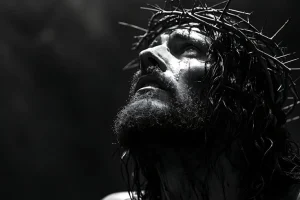
To grasp the depth of this declaration, we must begin with the word itself: telestai—a perfect tense verb describing an action completed with results that continue into the present. This detail is theological, not incidental. It means that what Christ accomplished on the cross is not temporary, partial, or reversible, but definitive, enduring, and eternally effective.
In the broader first century context, telestai carried several practical connotations:
- In commerce, it was used to indicate that a debt had been fully paid.
- In legal contexts, it signified that a sentence had been completely served.
- In military settings, it denotes that a battle is fully won.
- In everyday labor, it was used by workers reporting the completion of an assigned task.
Each of these meanings illuminates the cross.
So what, precisely, was finished?
Jesus was referring to a specific, divinely assigned work: the satisfaction of divine justice and the securing of salvation for sinners.
This means that salvation is not an open-ended provision to be completed by human effort. It is a completed achievement that faith receives.
And here lies the tension. Because while the gospel declares a finished work, the human instinct leans toward unfinished work— toward striving and supplementing what Christ has already completed.
But Jesus’ words, “It is finished”, leave no room for that instinct.
The Redemptive-Historical Context: : A Plan Brought to Completion
The declaration, “It is finished,” cannot be fully understood apart from the Bible’s Bible’s grand narrative. The cross is not an isolated event; event it is the intended climax of an eternal redemptive story, which unfolded across the entirety of the biblical canon.
When Jesus spoke these words, He was announcing that God’s eternal plan of redemption has reached its appointed goal.
From Promise to Fulfillment
The storyline began in Genesis 3, after humanity’s fall. In Genesis 3:15, God declared that the “seed of the woman” will one day crush the serpent’s head. This promise set a trajectory in motion.
The storyline unfolded as a series of covenantal developments:
- The Abrahamic Covenant (Genesis 12:1–3): God promised blessing to all nations through Abraham’s seed.
- The Mosaic Covenant (Exodus 19–24) produced the Law which exposed sin, and established a sacrificial system to deal with it provisionally.
- The Davidic Covenant (2 Samuel 7:12–16): God promised a King whose reign will be eternal.
Each covenant deepened clarity of redemption, but none brought completion. They were anticipatory—pointing beyond themselves.
Thus, “It is finished,” indicates that the long trajectory of redemptive history has reached its fulfillment.
The Scripture Fulfilled
Jesus Himself repeatedly framed His mission as fulfillment of the Scripture (Luke 24:44). This implies that the Old Testament is not merely background—it is prophetic.
The sacrificial system of the Law, while real and meaningful, are incomplete in themselves. They were types and shadows, pointing forward to a perfect sacrifice that will remove sins (Hebrews 10:1–4).
And, the prophetic writings foretold a coming Savior who would bear sin and bring righteousness (Isaiah 53).
At the cross, all these were fulfilled. Declaring, “It is finished,” Jesus was saying that every typological pattern has found its fulfillment, and every prophetic anticipation has been realized. Nothing remains outstanding in God’s redemptive plan.
This has deep theological implications. Christianity is not built on ongoing search for redemption, but on a completed redemption. Believers don’t live in anticipation of atonement, but in its reality.
The cross, therefore, was not one moment among many; it was the climax.
It Is Finished: Sin Decisively Dealt With
Very critical to grasping the far-reaching implications of “It Is finished” is understanding how sin was dealt with at the cross.
Scripture reveals that at the cross, Christ decisively dealt with sin in all its dimensions: its guilt, its penalty, and its offense before God.
A Substitutionary Sacrifice
Scripture presents Christ’s death as substitutionary. He died in our place (Isaiah 53:5–6). Our sin was transferred to Him, so that He could bear divine judgment in our place. By the same stroke, His righteousness is granted to us (2 Corinthians 5:21).
Jesus’ declaration, “It is finished,” indicates that this sin-bearing task has been fully carried out. There is no residual guilt left unaddressed for those who receive Him.
The Debt of Sin Paid in Full
Sin is not only moral failure. Scripture also describes it in terms of debt. Sin incurs liability before God’s justice.
This is where the commercial usage of telestai takes theological significance. In ancient times, merchants wrote it across receipts to indicate full payment.
That imagery aligns precisely with Christ’s cross work. Colossians 2:13–14 declares that God has forgiven us all trespasses, having wiped out the handwriting of requirements that was against us through he cross.
The “handwriting of requirements” represents the record of debt—the accumulated charges of sin. But that record was decisively canceled.
Therefore, Jesus declaration, “It is finished,” was an announcement that the debt of sin has been settled in full. There is no outstanding balance for the believer to pay.
Divine Justice Satisfied
Sin does not only affect humanity; it is an offense against God’s holiness. Thus, it is necessary that God’s justice be satisfied.
Scripture describes this aspect of Christ’s work as propitiation. Romans 3:25–26 explains that God set Him forth as a propitiation. God did not overlook sin; He dealt with it fully. His wrath against sin was exhausted in the cross.
This is why “It is finished” carries such weight. It means that divine justice has been satisfied. There is no further judgment remaining for those who are united to Christ by faith.
It is Finished: The End of the Old Covenant
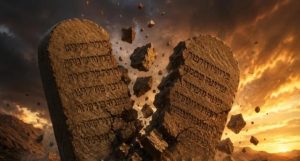
Jesus’ declaration, “It is finished,” also signaled the end of the Old Covenant. That Covenant, with its priesthood, sacrifices, and laws, was never intended to be eternal. It was preparatory. At the cross, it reached its appointed end.
The Sacrificial System Fulfilled
The sacrificial system was central to Israel’s existence. It was ordained to retain the people in fellowship with God. However, the sacrifices offered continually didn’t fully remove sin (Hebrews 10:11). Had sin been truly dealt with, they would have ceased.
But in contrast, Hebrews 10:12 declares that Christ, “after He had offered one sacrifice for sins forever”, sat down at God’s right hand. The change of posture—from standing to sitting, indicates completeness of the work.
So, declaring “It is finished,” Jesus signified that the final sacrifice has been offered. No further sacrifices are required. The entire system—its altars, its blood, its rituals—is fulfilled in Christ. They are no longer needed.
To continue as though sacrifices are still needed would be to deny the sufficiency of the cross.
The Veil Torn
The Gospels record a profound occurrence at Jesus’ death: the tearing of the temple veil (Matthew 27:51).
The veil covered the Most Holy Place—the symbolic dwelling of God’s presence. Under the Old Covenant, only the high priest entered that space—once a year, with blood of Atonement.
Theologically, the veil depicts restriction of access to God. But at the moment of Christ’s death, the veil is torn, by divine action, from top to bottom.
The symbolism is unmistakable: the barrier between God and man is removed, the need for a human priestly mediator has ended, and access to God is open through Christ (Hebrews 10:19–20).
Thus, Jesus declaring “It is finished,” also signifies the closing of a covenantal system. The Old Covenant has reached its intended goal in Him.
And for believers, this has immediate implications: we do not approach God through intermediaries, or repeated sacrifices, but directly, confidently, and continually—on the basis of Christ’s finished work.
The Triumph of the Cross
Viewing the cross only through the lens of suffering makes it look like a tragedy. But Jesus’ declaration, “It is finished,” reframed it as a decisive victory.
The cross was not merely where Christ died; it was where He conquered. This is one of the great paradox at the heart of Christian theology: the instrument of execution becomes the throne of victory.
Sin, Death, and Satan Defeated
The New Testament interprets the cross as a cosmic triumph over hostile powers. Colossians 2:14–15 states that:
- The accusation of sin is removed (“wiped out the handwriting”).
- Demonic powers are disarmed (“principalities and powers”).
- Victory is public and visible (“public spectacle”).
The cross is not a secret transaction; it is a public defeat of the forces that held humanity captive (Hebrews 2:14).
Notice the paradox: Christ defeats death by entering it. He overcomes Satan not by avoiding suffering, but by absorbing it and breaking its power from within.
So Jesus declaring, “It is finished,” was a declaration that the enemy’s claim over humanity is broken. Sin no longer reigns as master. Death no longer has ultimate authority. Satan no longer holds uncontested power.
The battle is not ongoing in terms of outcome; it is ongoing only in terms of enforcement.
Jesus’ Enthronement
One of the most profound but often overlooked themes in the Gospel of John is that the cross is simultaneously suffering and exaltation.
Jesus Himself anticipates this in John 12:32:
“And I, if I am lifted up from the earth, will draw all peoples to Myself.”
John immediately clarifies that Jesus was speaking about the manner of His death. Yet the language of “lifting up” carries double meaning: crucifixion and exaltation.
In John’s theology, the cross is the beginning of glory, not the opposite of glory. Jesus’ final words were not a whisper of exhaustion but a declaration of victory. The mission was not cut short; it was fulfilled precisely through suffering.
The cross becomes the place where: sin was judged, redemption was secured, hostile powers were defeated, and Christ was revealed as victorious King.
And immediately after, in the resurrection, this victory was publicly confirmed.
This reshapes how believers understand the Christian life. We do not follow a defeated Savior, but a victorious King whose work is already accomplished. “It is finished” is not a funeral statement; it is the battle cry of triumph.
Thus, spiritual warfare is not the struggle to achieve victory, but the struggle to live in light of a victory already won.
It Is Finished: Eternal Salvation Assured

One of the most immediate implications of Jesus’ declaration, “It is finished,” is the basis it provides for salvation assurance. Because redemption is truly complete, the believer’s standing before God is a settled reality.
Scripture does not present salvation as a partially completed process awaiting human contribution, but as a finished reality received by faith.
A critical distinction must be made here: Christianity is not a system of spiritual achievement; it is a declaration of divine accomplishment.
Ephesians 2:8–9 states this plainly:
8 For by grace you have been saved through faith, and that not of yourselves; 9 it is the gift of God, not of works, lest anyone should boast.
Salvation is a completed reality grounded in grace. This directly flows from the logic of the cross. If Jesus’ final words were “It is finished,” then salvation cannot simultaneously be “unfinished” in its essential basis.
To add human works as a necessary supplement is a grievous theological contradiction. It implies that the cross was insufficient and requires completion.
But Scripture refuses that conclusion. Christ’s finished work means that nothing remains to be added for reconciliation. Faith, thus, is not a work that completes salvation; it is the means by which we receive a completed salvation.
The End of Striving for Acceptance
Many believers, even after conversion, live with a persistent internal tension: the feeling that their acceptance before God fluctuates based on performance. When they succeed spiritually, they feel accepted; when they fail, they feel disqualified.
This posture, while emotionally understandable, is theologically inconsistent with Jesus’ declaration, “It is finished”. If Christ’s work is finished, then acceptance before God is not a variable—it is a fixed reality grounded in Christ, not us (Romans 8:1).
This means the believer does not relate to God from a position of ongoing judicial uncertainty, but from a position of declared righteousness in Christ. The logic is simple but transformative:
- If the debt is fully paid, there is nothing left to prosecute.
- If righteousness is fully granted, there is nothing left to earn.
- If the verdict has been declared, there is nothing left to overturn.
The Danger of Functionally Denying “It Is Finished”
While we affirm the doctrine of grace, it is still possible to functionally deny the finished work of Christ in daily life.
This happens whenever:
- We treat guilt as more powerful than the cross.
- We make performance the basis of our acceptance.
- We ground assurance in emotional consistency rather than Christ’s faithfulness.
This drift often leads to a subtle form of legalism, not firstly in outward behavior, but in inward posture. Believers live as though the cross established a possibility of salvation that must be sustained through ongoing effort.
But telestai resists this entirely. Christ’s finished work does not eliminate obedience; it redefines its nature. Obedience becomes the fruit of having being accepted, not the means of acceptance.
At the heart of assurance, then, is not confidence in self, but confidence in Christ—a confidence anchored in a single, decisive declaration—It is finished.
What This Means for Daily Christian Living
Christ’s finished work is not only doctrinal; it is practical. It reshapes the entire rhythm of Christian living. It is not only the basis of how we are saved, but also the framework within which we live.
A New Identity Rooted in Completion
One of the most subtle distortions in Christian experience is identity built on how “well” one is doing spiritually at any time. But the gospel does locate identity, not in performance, but in Christ’s finished work.
If it is finished, then our identity is settled (2 Corinthians 5:17). This means believers don’t wake up each day laboring to get accepted by God. We live as those already accepted (Ephesians 1:6).
Christian identity is grounded in union with a finished work.
Obedience from Rest
One common misunderstanding is that grace reduces the seriousness of obedience. The opposite is the case. Christ’s finished work does not eliminate obedience; it reframes its motivation.
Under a performance-based framework, obedience is an attempt to secure or maintain acceptance. But under grace, obedience is a response to already-secured acceptance.
This is the logic Paul develops in Romans 12:1:
“Therefore, I urge you, brothers and sisters, in view of God’s mercy, to offer your bodies as a living sacrifice…” [NIV]
Notice the order: mercy first, then response. The self-sacrifice is not to obtain mercy; it flows from mercy already received.
This produces a different kind of obedience, which is gratitude-driven, identity-driven, and relational. The believer labors, but from rest—not toward acceptance, but from acceptance.
Freedom from Guilt
Perhaps one of the most liberating implications of telestai is its effect on guilt. Guilt, in its proper form, is a signal of moral failure. But lingering guilt becomes a spiritual burden that distorts Christ’s finished work.
The cross addressed guilt at its root, not by minimizing sin, but by fully dealing with it (Romans 8:1). This is a judicial reality. The courtroom verdict has already been rendered.
Therefore, past sins don’t define our standing, present struggle does not cancel our justification, and future failure does not overturn Christ’s finished work.
This does not lead to moral indifference. Rather, it produces secure repentance—the freedom to confess sin without fear of rejection. We no longer repent to regain relationship; we repent within an already established relationship.
In this way, telestai is not only a theological anchor but also a daily refuge. It frees the conscience from lingering guilt, grounds obedience in grace rather than fear, and stabilizes identity in Christ rather than in fluctuating experience.
And it reorients the entire Christian life around a central truth: The work is not ongoing in terms of acceptance—it is complete. Thus, believers don’t strive to finish what Christ left incomplete. We live out what Christ has already finished.
Conclusion: Living in the Light of a Finished Work

“It is finished” is not just the closing line of the crucifixion narrative; it is the theological center of Christian faith. Everything the gospel claims about salvation, assurance, and identity flows from it.
At the cross, Jesus did not merely endure suffering; He accomplished atonement, dealt with sin, canceled the debt, gave substance to the covenantal shadows, and disarmed the powers of darkness. He didn’t leave the redemption work unfinished.
This means believers don’t live in a state of uncertainty, constantly trying to finish what wasn’t finished. Instead, we live in certainty of a completed redemption already secured in Christ.
Then:
- Faith is not a tool for finishing salvation, but the means of entering into what is already finished.
- Obedience is not an attempt to earn acceptance, but the fruit of already being accepted.
- Worship is not a performance to gain divine attention, but the response of we who have been brought near through a finished sacrifice.
The tragedy of distorted gospel is not that Christ is denied, but that unfinishedness is subtly reinserted where Christ has spoken finality. But the cross resists such distortion. Instead, it calls believers into a settled posture: trust rather than striving, assurance rather than anxiety, communion rather than distance.
To live in light of “It is finished” is to make Christ’s finished work the interpretive lens for failure, obedience, and identity. It is to recognize that the Christian life is a daily participation in the reality of a finished work.
The cross didn’t leave us with a task to complete, but with a truth to believe and a life to live in response. Therefore, the final word over salvation is not uncertainty, striving, or fear. It is finished.
Further Reading:
- What Does “It Is Finished” Mean?
- What Did Jesus Mean by “It Is Finished”?
- The Finished Work of Christ